
A patchy beard is one of those things that a lot of people worldwide have. In fact, around 50% of men out there have uneven facial hair. And there can be a lot of reasons why that happens, from genetics to your diet, age, stress levels, and so on. However, it’s a good idea to figure out how to start fixing a patchy beard. It might seem hard at first, but narrowing down how to fix a patchy beard is easy once you know the steps. Thankfully, that process is not very difficult; you just have to figure it out.

Why is the beard patchy?
If you are wondering why you should fix a patchy beard, the most important thing is understanding why you have those issues in the first place. And as you can expect, there are a multitude of reasons behind the beard being patchy. Here are some of the major ones:
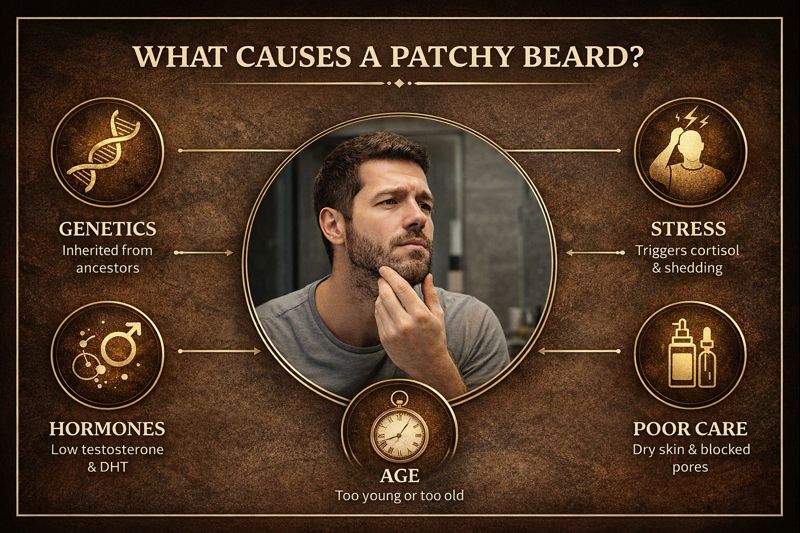
- Genetics matter here. The DNA will determine things like hair growth speed, follicle count, thickness, and color, but also the beard pattern. If your ancestors had a patchy beard, you might end up having one as well.
- Then there are other things like testosterone and DHT levels. If the testosterone levels are low, you will have slow beard growth, peach fuzz hairs, and lots of growth under the jaw. Those things can be problematic if you want a more even beard, but they do happen, so there’s not a whole lot you can do.
- Your age matters as well. If you’re in the 25 to 35 years range, you will see beard maturity. But if you’re under that age range, it’s possible to have patchy beard issues. And it’s just as common in the case of older people, too.
- Don’t dismiss stress, either. This will trigger cortisol, which slows hair regrowth, and it will increase the shedding process. Stress also lowers the testosterone levels, which as we said, can make the beard patchy. So there are lots of different reasons why you might be encountering certain issues and challenges.
- In the end, the lack of proper skin health and adequate care can also lead to a patchy beard. After all, your beard follicles need proper nutrition, blood circulation and a moisturized, clean skin. If you have blocked pores and dry skin, that will definitely stun the potential of your beard. So that’s certainly something you want to address as much as possible, for the best results.
Read Your Patch Pattern Before You Treat It
Not all patches are the same, and the fix that works depends on which kind you have. Before buying anything, read your own face.
Cheek patches — sparse coverage on the upper cheeks while the chin and jaw grow fine — are the most common complaint, and also the most likely to improve with time. Facial hair matures on its own schedule: the chin and upper lip usually come in first, and the cheeks often fill in last, sometimes years later. If you’re under 25 and your cheeks are patchy, the most honest advice in this entire guide is to wait. The vellus-to-terminal conversion — fine, pale hairs maturing into thick ones — is slow and uneven, and many men who eventually grow dense beards had sparse cheeks well into their mid-twenties.
Connector gaps — the strips between mustache and chin, or chin and jaw — are a different story. These are the areas where follicle density is simply lower, and they’re the classic candidates for styling around rather than treating through. A goatee, Van Dyke, or circle beard turns a connector gap into a design choice.
Then there are the truly bald spots: areas with no visible hair at all, not even fine vellus fuzz. Here’s the uncomfortable truth most guides bury: minoxidil, oils, and dermarolling work on existing follicles. Where there are no follicles, there’s nothing to stimulate. Bald spots respond to styling, fillers, or transplant — not to serums. Knowing which kind of patch you’re looking at saves you months of treating the untreatable.
—
Grooming tips to help you improve the look of your patchy beard
When you are figuring out how to fix a patchy beard, the most important thing is to focus on grooming. There are a multitude of tricks that you can use to help make the patchy beard look better. It will take a little work, but if you do it right, the results can be impressive in the end.
Trim it smartly, don’t keep it short
What you will notice is that those patchy beard issues are not as easy to spot when the hair is a bit longer. That’s why it doesn’t really make sense to try and keep the hair short. There are certain styles you can use in order to hide the patchy spots. The stubble look, Balbo beard, short boxed beard, the Van Dyke style or even a goatee can help you quite a lot. It might take a little to ensure it’s all handled correctly, but you are bound to appreciate it, and that’s certainly something to keep in mind.
Define your cheek and neck line
Does it make sense to define these lines? Yes, it does, because clean lines allow your beard to look a bit thicker, and that will surely come in handy. Not only that, but it gives you that sense of symmetry, which is totally something you want to consider. And the best part is that it will also draw attention from patches. The neckline should usually be above the Adam’s apple. If you can follow the curvature of your jaw, that’s actually a great tip to keep in mind.
Brush every day
It seems like a chore to try and brush your patchy beard every day. But it does have a benefit, like training your hair to lay over the empty spots. And while it does sound a tad difficult at first, it’s something you get used to pretty fast. Having a boar-bristle brush for a very thick appearance is a great idea. It also helps with the sebaceous oil distribution, which is an extremely important thing for you to take into consideration as much as possible.
Pick the right beard length
There are a few things to keep in mind here. For example, a good rule of thumb is to have a medium stubble or 3-5 mm. Not only does that look great on most men, but it also offers a more consistent and cohesive style. Plus, if the beard is too long and without density, then the holes become obvious. That’s why going for that medium stubble length is the better idea, and it’s what will give you the best results every time.
Use a beard filler
Yes, it might not seem like the most appropriate solution, but hey, it does work, and it can provide you with a pretty impressive result. The idea here is to try and opt for a beard filler because it can be effective and it will give you the consistency that a lot of people are looking for.
But what kind of beard filler should you consider? Beard pencils are quite inexpensive and in this case, they can prove to be a major option to keep in mind. There are also beard pencils, along with a tinted beard balm and beard fibers. Those are all great solutions to keep in mind, and could potentially help you for a short-term fix. But don’t expect this to be a long-term solution, it’s just something temporary and expected. Yet it could be worth it, so use it to your own advantage.
A daily routine you can use for beard growth

Using step by step patchy beard solutions is a great idea, but it comes down to knowing how to create that routine. Thankfully, it’s very easy to do and following it can be rather simple:
- In the morning, you wash the beard with some beard wash. You can do that 2-3 times a week, there’s no need to do it on a daily basis. Also, in the morning, apply beard oil on your beard. It helps with fixing a patchy beard because it will hydrate the follicles, while reducing any breakage.
- Either in the morning or night, brush your beard for a few minutes. It stimulates the overall circulation, and you will also train the beard to grow a certain way. Again, simple things you can do, but they will make a difference, and that’s something you always want to pursue as much as possible.
- 2-3 times a week, make sure that you are exfoliating your skin. The idea here is that you want to remove dead skin, which is blocking your follicles. It will help more than expected, and it’s certainly going to help with the beard growth process.
- Every day, try to moisturize under the beard. It leads to better growth because you are keeping the skin healthy, and that will matter a whole lot more than you might expect.
Track It Like a Project: Progress Photos and the 90-Day Rule
The guide says to give any routine 8–12 weeks, which is correct — but almost nobody actually does it, because the mirror lies to you daily. You see your face every morning, so gradual change is invisible. What you notice instead is every remaining patch, every day, which is why most men quit in week five or six, right before things start turning.
The fix is embarrassingly simple: take progress photos every two to four weeks. Same lighting, same angle, same distance — bathroom mirror selfies are fine as long as they’re consistent. You’re not posting these; they’re data. When month three’s photo sits next to month one’s, the change (or lack of it) becomes obvious in a way the daily mirror never shows.
Pair the photos with a dead-simple log: what you applied, when you dermarolled, how your skin reacted. This does two jobs. First, it keeps you consistent — the routine survives because it’s written down. Second, if something works (or irritates you), you know what “something” was. Beard growth is slow enough that memory alone can’t track cause and effect across twelve weeks.
And the 90-day rule is a floor, not a promise. Some routines need six months. The photos are what tell you whether you’re on the right track or just being patient about the wrong approach.
—
Growth strategies that will work in the long term
Growth strategies that will work in the long term
Microneedling
It might sound scary at first, but microneedling is actually a very common method if you are wondering how to fix a patchy beard. The benefit is that it creates small injuries which will lead to a boost in blood flow, collagen, and other beard growth factors. On top of that, the health products will absorb deeply, which in turn will deliver a much better experience. If you go down this route, you will need a needle size of 0.5 mm for facial hair, and the frequency can be around once a week. You do want to sanitize the tool and apply beard serum after the fact.
Using minoxidil
Minoxidil might be an off-label option, but it is very effective, and that’s what matters. The downside is that it can take up to 6-12 months to actually see the full results, so that alone is going to be quite the struggle. Since it is a medication treatment, you will have side effects. Those can be anything from irritation to shedding during the early stages and even some irritation. Ideally, you want to talk with a medical professional beforehand, just to ensure that you are safe and nothing bad happens.
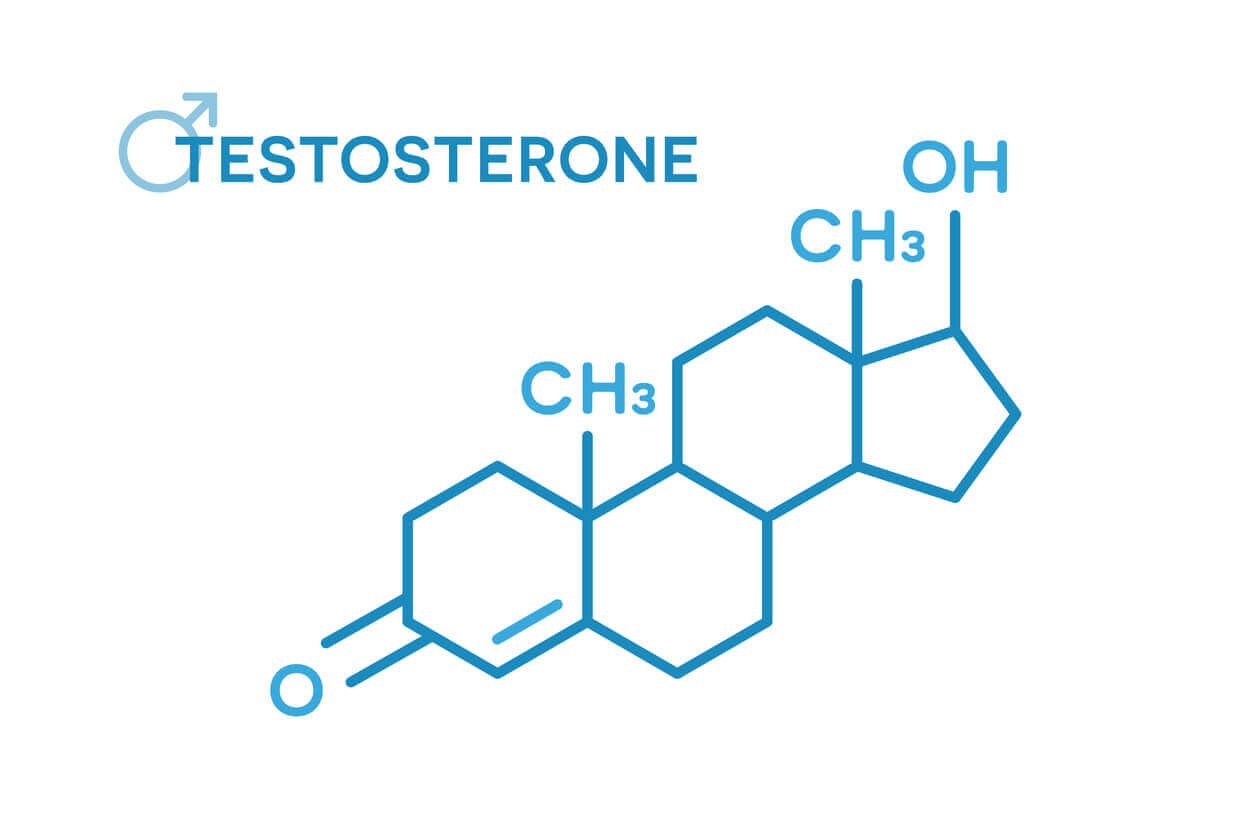
Minoxidil's Fine Print: The Shedding Phase, the Dryness, and the Exit Plan
The guide covers minoxidil as an option — and it is, for many men, the most effective one. But the articles that recommend it tend to skip the three things every first-time user actually runs into, and all three are why people quit before it works.
First, the shedding phase. In the first weeks, many users notice more hair falling out, not less — including in the beard area. This is widely documented across user communities and it’s normal: weaker hairs shed as follicles reset. It looks like the treatment is backfiring. It isn’t, but nobody warns you, so month one feels like failure. Expect it, and don’t judge anything before month four.
Second, the dryness. Minoxidil formulas contain alcohol, and twice-daily application dries facial skin out — flaking, itching, tightness. The fix that experienced users swear by: let the minoxidil absorb fully, then moisturize — don’t layer moisturizer directly on top of a fresh application, and wash the area before reapplying. If dryness is severe, the foam formulation tends to be gentler than the liquid. And skip the alcohol-heavy aftershave on minoxidil days; you’re already asking a lot of that skin.
Third, the exit plan nobody talks about. Documented long-term users — including several who filmed month-by-month journeys on YouTube — report that gains can fade if you stop before the new hairs have fully transitioned to mature, terminal hairs. That transition takes many months. Going in, understand you’re signing up for a long commitment, not a three-month experiment. Talk to a doctor before you start, especially with any heart or blood pressure history — this is a real medication used off-label, not a cosmetic oil.
—
For DHT improvements
You can improve the testosterone levels by having a better diet. Eggs, spinach and leafy greens, red meat, nuts, and oysters are usually a very good option to keep in mind. Even supplements like D3, omega 3 fatty acids and zinc will help quite a lot.
At the same time, you also want to improve some of your daily habits. These include quality sleep of up to 9 hours a night, strength training, avoiding smoking and alcohol, lowering the body fat levels, and also having sunlight exposure in the morning. It also helps if you are avoiding any endocrine disruptors and plastics. Those might not seem very problematic at first, but they could become an issue going forward.
Reduce your stress levels
There are plenty of ways for you to lower stress levels. For example, it makes sense to start walking through nature, as it is handy and very relaxing as well. Plus, meditating up to 10 minutes a day will do wonders, as it helps you refocus and push away any negative thoughts. You can also attempt other things, such as deep breathing and engaging in all kinds of new hobbies. Plus, of course, you want to interact with other people, connect and talk with them. That’s what will provide the best outcome, and in the end, the experience will be very rewarding.
Caffeine beard serum
It’s also a trick that you can use and one that’s actually very good. It will help you because it stimulates the follicles, it enhances the hair shaft growth, while also improving the overall blood circulation to the beard. And on top of that, you can also try to use rosemary and peppermint oil. These are excellent and can provide exceptional results going forward. With their help, you will be able to increase the follicle count, and you will boost the thickness of your existing hairs, too.
Mistakes you want to avoid
Granted, when you have a patchy beard, it becomes very easy to make all kinds of mistakes. That’s why we wanted to make a quick list so you know what would be the stuff to avoid:
- Shaving just to expect the beard will grow back thicker is not a good idea. use our step by step patchy beard solutions shared above. And of course, do not shave expecting the beard to regrow thicker, because it will not happen.
- The same stuff is valid if you cut it too early, you need patience, otherwise there will be problems you encounter.
- Over-washing is a problem, mainly because it removes natural oils from the beard, and that’s certainly something you want to avoid.
- Avoid picking at the ingrown hairs, it will only lead to problems. A similar thing is valid when it comes to wearing tight masks which rub the beard area.
The Last Resort, Honestly: Beard Transplants
If you’ve read this far, grown it out for months, tried the routine, and the patches haven’t budged — there’s one more option, and it deserves an honest explanation rather than a sales pitch.
A beard transplant moves hair follicles from elsewhere on your body (usually the back of the scalp) into the patchy areas of the beard, one follicular unit at a time. It’s the same FUE technique used for scalp hair restoration, performed by a hair restoration surgeon. Because it’s your own living hair, the result is permanent and grows like normal beard hair.
Here’s the honest part. It’s surgery: expensive, with real recovery time, and it depends entirely on having a good donor area and a skilled surgeon. It works best for clearly defined gaps and patch patterns — it’s not the answer for generally thin coverage across the whole beard. And like any medical procedure, it needs a proper consultation first, not an internet purchase.
Think of it as the top of a ladder, not the first rung. Styling and patience cost nothing. Topicals and dermarolling cost little. A transplant costs a lot and can’t be undone, which is exactly why it belongs at the end of the decision tree — for the man who’s tried everything else and knows precisely which patches he wants filled.
Conclusion
Learning how to fix a patchy beard will require quite a bit of time and commitment. But these tips shown above are very effective. It all comes down to implementing them properly and having enough patience. It won’t be a walk in the park, that is true. However, if you stick with this and learn how to boost hair growth, you can finally get rid of those patchy areas.
Frequently Asked Questions
Q: How do you fix a patchy beard?
A: You cannot create follicles where none exist, but you can dramatically improve the look: let it grow longer (length covers patches), define sharp cheek and neck lines, brush daily to train the hair, and use a beard filler for special occasions. For long-term growth, the strategies in this guide — including microneedling and minoxidil — are worth discussing with a dermatologist.
Q: How long does it take to fix a patchy beard?
A: Expect months, not days. Give any routine at least 8–12 weeks of consistent effort before judging results — beard growth cycles are slow, and most men quit just before the patches start filling in.
Q: Does trimming help a patchy beard look fuller?
A: Yes — counterintuitively, a smart trim helps more than letting it grow wild. Keeping the stronger areas slightly shorter and defining clean lines makes patchy spots far less noticeable than an uneven, unkempt beard.