
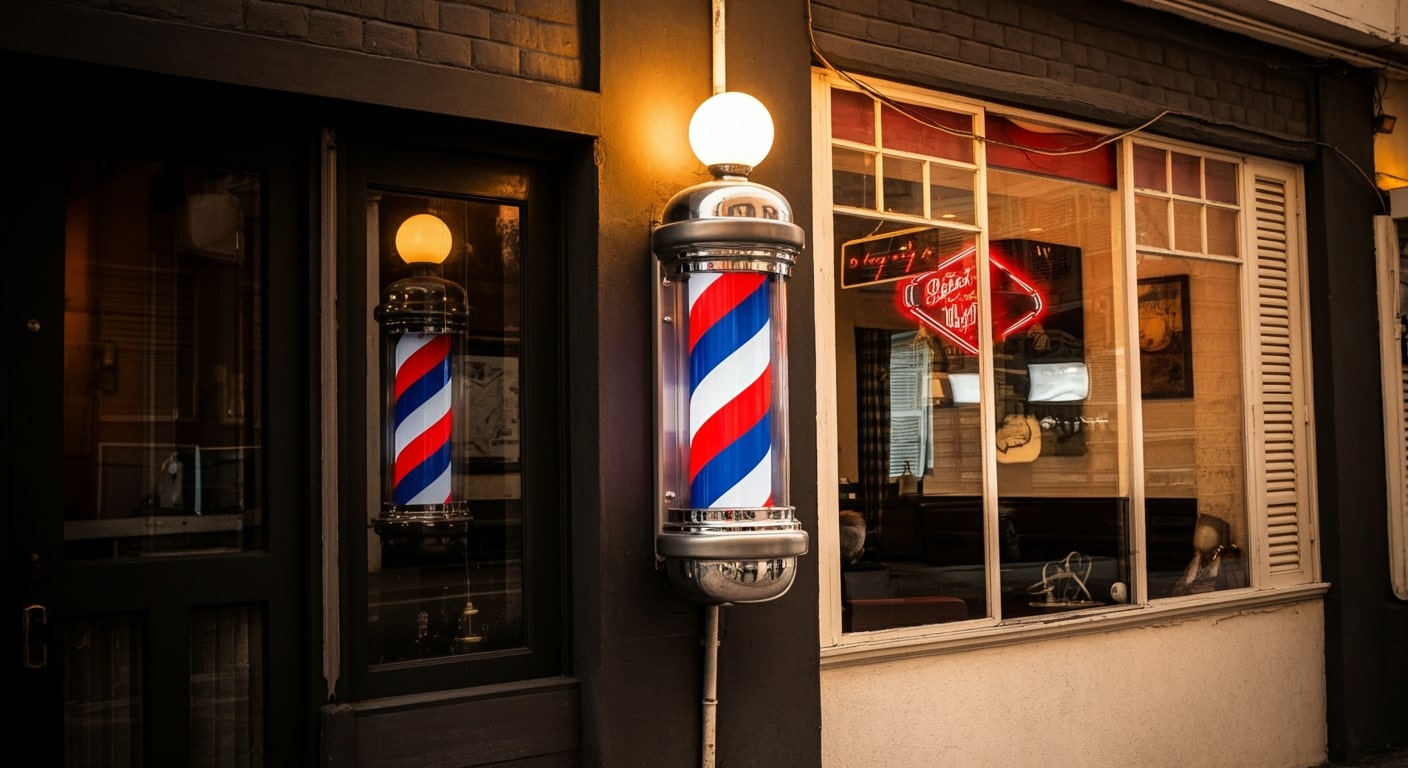
The barber pole is an iconic symbol that instantly tells you a barber is ready to help with a clean cut or shave. While some people assume barber poles are a relatively modern invention, that’s not the case. In this article, we’ll explore where the barber pole originated, why it was created, and the history behind its distinctive colors.
It’s important to realize that barber poles are not randomly designed objects. They were originally used as a form of advertising and have existed for centuries. This is not a symbol that emerged recently. While the barber pole has gone through many variations over the years, it has consistently represented hygiene and cleanliness in one form or another. When you learn the history of the barber pole, it becomes far more fascinating than you might expect.
Where did the barber pole originate?
The origin of the barber pole is both fascinating and somewhat macabre. During the Middle Ages, medical services were far from clean, hygienic, or advanced. People lacked the tools and knowledge we rely on today, and as a result, bloodletting was a common medical practice. As the name suggests, this involved cutting a vein and allowing blood to drain from the body.
At the time, bloodletting was widely used to treat a variety of ailments, ranging from serious illnesses like the plague to minor issues such as sore throats. Monks were often responsible for caring for the sick, but because many procedures required sharp instruments, barbers began assisting them. This is how barbers gradually became involved in medical tasks.

A key turning point came in 1163, when Pope Alexander III prohibited clergymen from performing bloodletting and similar procedures. While physicians did exist, many viewed this work as menial, leaving barbers to take on the responsibility. As a result, barbers increasingly became known for performing these procedures.
Eventually, barbers were regarded as surgeons in many regions, and this history directly influenced the colors of the barber pole. The red and white stripes represent blood and bandages—white symbolizing the bandages used to stem bleeding, and red representing the blood absorbed during treatment. After being cleaned, bandages were often hung out to dry, sometimes still stained with blood. These bandages were displayed on poles outside barber shops, which ultimately led to the creation of the barber pole as we know it today. This distinctive symbol reflects the origins of barbering and explains why the pole carries its iconic colors.
Another take on the barber poles
Another interpretation of the barber pole relates to the stick patients would squeeze during bloodletting to make the veins in their arms more visible. In medieval times, this practice became closely associated with the pole itself. As mentioned earlier, European barber poles traditionally featured only red and white stripes, while American barber poles later introduced blue.
So what does the blue color represent on American barber poles? One explanation suggests that blue symbolizes the veins cut during bloodletting. Others argue that the color was added as a sign of patriotism, unrelated to the medical procedure itself. Tracing the exact origin of this detail is not entirely straightforward, but it does highlight how complex and demanding these procedures were, especially in an era without advanced medical technology.
Barbers were often required to use primitive tools to perform procedures that could save lives, largely because few others were willing or qualified to do this work at the time. Although the task was difficult and far removed from grooming, it did allow barbers to attract more clients—often for medical reasons rather than haircuts or shaves.
Did barbers get banned from performing surgeries?
As society evolved and medical practices improved, attitudes toward healthcare began to change. This shift became especially noticeable after the Plague, when hygiene and health started to receive greater attention. Although many challenges remained, people gradually recognized that barbers should no longer be responsible for performing surgical procedures.
By the mid-1500s, barbers in England were officially banned from carrying out surgeries. However, they were still permitted to perform certain less invasive medical tasks, such as extracting teeth. It’s also important to note that barbers and surgeons continued to belong to the same trade guild until 1745. As a result, barbers remained involved in medical work for a long period, and in some regions—particularly in parts of the Americas and more remote areas—this practice continued into the 1800s.
Over time, the role of the barber-surgeon faded. In England, the last barber-surgeon died in 1821, marking the end of this dual profession. Still, the history of the barber pole reflects the many roles barbers once held. It serves as a reminder of how central barbers were to communities for centuries.
In the last 200 to 250 years, barbers gradually narrowed their focus to the grooming services we recognize today. Even so, the barber pole remains a lasting symbol of an earlier era, when barbers approached their work with a very different purpose and perspective.
Why did the barber pole colors stay this way for a very long time?
The persistence of barber pole colors largely depends on the time period and public perception. Historically, barber poles served as a clear way for barbers to communicate the services they offered. During medieval times, barbers were involved in surgical and other physically demanding medical tasks. The red and white stripes came to symbolize the bloody and clean bandages used during these procedures.
As this type of work became more common, barber-surgeons began forming their own guilds in the 17th century. Around this time, the barber pole evolved into a recognizable symbol of the profession. It functioned as a form of advertising, signaling that a barber provided a range of services beyond basic grooming. Over time, this helped establish a clearer and more unified identity for the trade.
In addition, membership in a barber-surgeon guild gave the barber pole added meaning. Displaying the pole publicly signaled the type of work a barber performed and reinforced the legitimacy of their practice. Being part of a guild indicated trust, professional recognition, and adherence to shared standards, all of which helped explain why the barber pole design remained unchanged for such a long period.
Why did the surgeons and barbers separate?
By the early 1800s, as mentioned earlier, a clear separation began to form between barbers and surgeons. Until then, the same individuals often performed both roles, but advances in medical science gradually changed that dynamic. It became increasingly evident that some practitioners would specialize in medical treatment and research, while others would focus solely on traditional barbering services.
This shift led barbers to concentrate on hair-related services, while surgeons devoted their work to medical procedures. As a result, people could seek more specialized care that better matched their needs. In practical terms, barbers were not trained doctors and relied on primitive methods to relieve pain. As medical knowledge continued to evolve, it became clear that more advanced solutions were necessary. Medieval practices were left behind, making way for modern medical approaches that offered safer and more effective care.
What’s the modern symbolism of a barber pole?
In modern times, the symbolism of the barber pole varies depending on perspective. Many people still associate it with its historical roots, when bandages were wrapped around a pole to keep them clean and visible. Although barbers no longer provide medical services, this legacy remains meaningful to many. Today, people seek barbers primarily for grooming and self-expression, and the barber pole continues to signal that tradition.
While the original medical significance of the barber pole has faded, its visual identity remains strong. The red and white stripes have been used for centuries, and rather than abandoning them, barbers continue to embrace this familiar design. This enduring symbolism helps distinguish barber poles and reflects the lasting connection between past and present.

Although the tools and methods of barbering have evolved, respect for the profession’s history remains central to the barber pole’s meaning. Modern poles combine movement and striking visuals with a nod to tradition, honoring how the craft has developed over time. This appreciation of history reinforces the barber pole as both a functional sign and a tribute to the profession’s rich heritage.
Why are American barber poles red, white and blue?
In the United States, barber poles differ noticeably in color. In addition to the traditional red and white stripes, American barber poles also include blue. What many people don’t realize is that the earliest barber poles were linked to a brass basin, which held leeches as well as a vessel used to collect blood during medical procedures.
As barbering evolved in America, barbers began incorporating their own interpretations into the pole’s design. One explanation suggests that the blue stripe represents venous blood, while others believe it was added for symbolic or cultural reasons. Some interpretations even link it to status, suggesting the services were associated with higher social classes. Regardless of the explanation, the American barber pole developed a distinct identity, setting it apart from its European counterpart while remaining rooted in the same historical tradition.
Conclusion
It’s important to recognize that barbers have long been committed to offering skilled, professional services. For centuries, they played a dual role that many people today may not fully realize. Although the profession shifted its focus during the 1800s, the barber pole and the history behind it continue to honor those earlier days.
This lasting symbol reminds people of where the profession came from and reflects a respect for its past. The barber pole stands as a tribute to that history—one that modern barbers continue to appreciate and take pride in. This strong connection to tradition is part of what sets the barbering industry apart and gives it its enduring character.