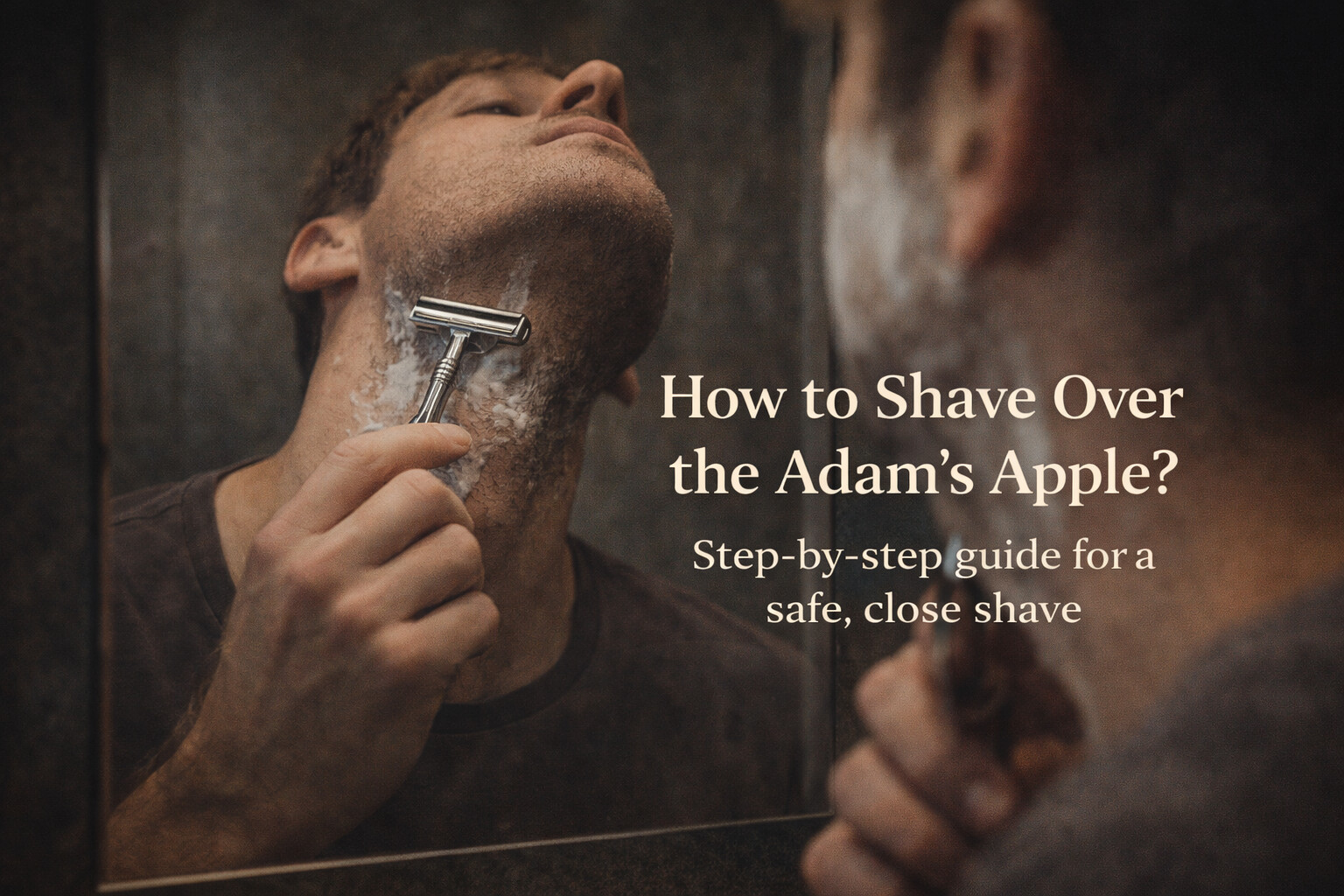
Shaving over Adam’s apple is incredibly important because it allows you to create a fresh-shaven, clean and cool look. But is it safe to shave over Adam’s apple? That’s what a lot of people are wondering and for a very good reason. Because since this is a very sensitive area, and protecting it should be of the utmost importance, especially in these situations.
Why is Adam’s apple a tricky area to shave?
There are multiple reasons why you need to be extremely careful when shaving over Adam’s apple. Here’s why:
- The skin is very thin and delicate in this region. So, that means it will cut easily and the skin also irritates extremely fast. That’s certainly something you want to think about.
- Then, there’s shifting movement, which could lead to you cutting the skin accidentally. It might seem common sense, but more often than not, cuts will appear in this area, and you really need to figure out how to handle those.
- Another important aspect to keep in mind is that you will have sharp angles and curves. That means the blade will not be very stable, nor will it stay flat. And it’s simple stuff like this which can be very problematic. Addressing it adequately can help quite a lot, and that’s exactly what you want to pursue.
- Then there’s also the fact that the area as a whole has a very high bloodflow. Any small nick will bleed a lot. Even if it’s not dangerous for your overall health, it’s certainly annoying, and that’s the thing that you want to focus on.
- It’s also just as important to note that the hair direction can also end up changing randomly. The quicker you are addressing that, the better it will be, and it’s certainly something you want to focus on as much as possible.
Step by step technique to shave over Adam’s apple
Should you shave over Adam’s apple, though? The short answer is that yes, you should, and there are a multitude of methods you can use to make that process easier and seamless. Here you have a set of tips.
Open the pores and soften your hair
As you might already know, coarse and dry hair are the main enemies of razor blades. And especially on the neck, the hair tends to grow thick, and it will curl sharply. What you want to do is to shave after the steamy shower, or you can apply a hot towel for 1-2 minutes. You can also hydrate using a shave gel or a cream. Let that lather soak in for 30 seconds, and then you can shave.
Alternatively, you can use pre-shave oil if you have a very sensitive skin. Not only will this help reduce friction, but it also allows you to cushion the blade at least a little bit. It will help with the reduction of ingrown hairs, while also offering you a cleaner cut, something that matters quite a bit.
On the neck, use a lather you can see through
Here’s a small trick that makes a real difference around the Adam’s apple: on the neck, shave through something translucent. A clear or semi-transparent shaving gel, a thin cream, or even a slick shaving oil lets you watch exactly where the blade edge is — which matters a lot on curved ground where you can’t afford a blind stroke.
Thick, opaque canned foam does the opposite. It hides the bump, the neckline, and the direction your last stroke went, so you end up shaving by feel in the one place where feel is least reliable. Many shavers keep their normal lather for the cheeks and jaw, then wipe it off the neck and switch to a transparent gel or oil just for the Adam’s apple area. You still get glide and cushion; you just don’t lose sight of the terrain.
Map the grain
In most cases, the hair grows downward below your jawline, sideways near your Adam’s apple, or even upward near the chin edges or the upper throat. What you want to do is to use your fingers and then feel the direction of the hair with a few strokes. When you see that it feels smooth, that will be the grain. If it feels scratchy for some reason, that means it’s against the grain and you want to prevent any problems. A good rule of thumb is to always shave with the grain. If necessary, you can go against/across, but try to avoid that unless it’s absolutely necessary.
Where to actually set your neckline: the two-finger rule
If you’re keeping a beard, “shaving the Adam’s apple” usually means something more specific: cleaning up the neckline. And the single most common mistake men make here is setting that line too high, right on the bump itself — which forces you to shave over the worst possible terrain for no reason.
Barbers use a dead-simple reference: place your middle and index fingers flat above your Adam’s apple. The point just above your top finger is where your neckline should sit. From there, imagine a shallow U-shape connecting that point to the back of each ear. Everything below that U gets shaved; everything above stays. That keeps the razor one to two finger-widths above the peak of the cartilage — far enough that you’re shaving flatter ground, close enough that the beard still looks intentional.
A few practical notes from people who do this daily: set the line in the middle of the neck first and work outward toward each ear, because it’s much easier to keep both sides symmetrical than to start at one side and guess your way across. Tilt your chin up slightly so the skin stretches on its own. And if you wear a full beard, resist the urge to creep the line higher over time — the higher it goes, the more of the bump you’re fighting, and the thinner the beard looks from the side.
Clean-shaven? Then the line doesn’t apply — you’re taking the whole neck, bump included, and the technique sections below are your whole game.
Stretch your skin
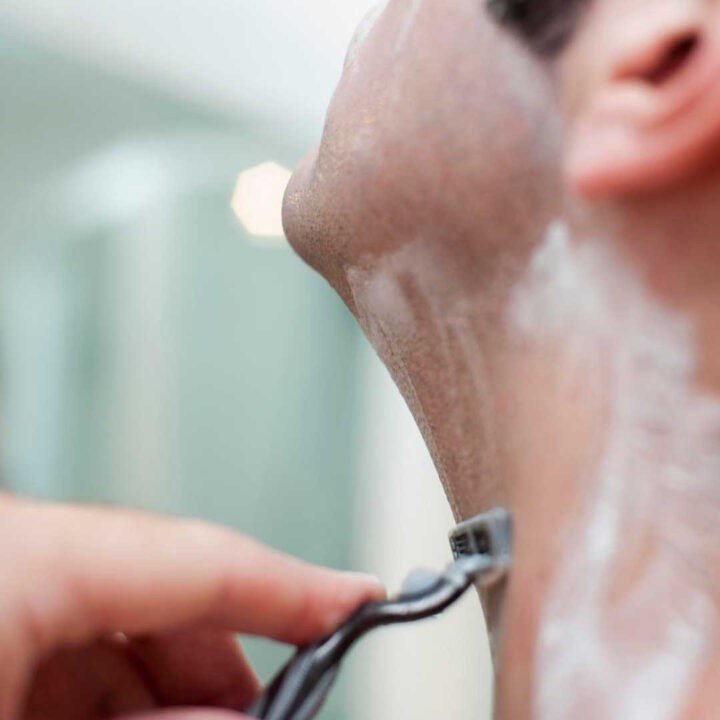
Why would you want to stretch the skin of a sensitive area? It’s quite simple, actually. You need to move the Adam’s apple out of the way so you can cut the region without problems. For example, if you want to shave on the right side of the bulge, pull the skin left. If you want to shave on the left side of the bulge, you pull the skin right. You don’t want to stretch over the peak of the bulge. If you absolutely have to, use very short strokes with little to no pressure.
Use short strokes and a light touch
That’s the thing, since the area is very sensitive, the last thing you want is to rush towards the Adam’s apple. Instead, try to keep the razor at an angle of around 30 degrees. Also, it’s highly recommended to not press down, instead you want to let the blade to its own work. And on top of that, you will notice that those short strokes will give you more accuracy, while reducing any issues like snagging for example.
Moreover, try to rinse the blade every few swipes. That will help you avoid clogging. If the blade is clogged, it could lead to cuts and other problems. Naturally, it’s a great idea to just avoid that as much as possible, so you can prevent any possible concerns or issues that might arise. Don’t apply pressure on your neck, no matter the situation. Razor burn and cuts are your worst enemy, but those will happen if you are applying too much pressure.
Should you do a second pass on the same area? Shaving over Adam’s apple is already very challenging, so a second pass can lead to razor burn or cuts. Sure, you can try to get back to that spot you missed, but again, you want to avoid adding any significant amount of pressure. Avoiding that and doing everything you can to stay away from possible problems is what will help you the most here. And the quicker you avoid such problems, the better.
When the standard tricks still fail: troubleshooting the trouble nook
Some men do everything right — hot towel, slick lather, skin stretched sideways, swallow-and-hold — and still come away bleeding. If that’s you, the problem is probably not the technique in general. It’s the specific hollow just above the bump, the notch at the top of the thyroid cartilage. That little dip is where the razor head can’t sit flat, and it’s where most Adam’s apple nicks actually happen.
A few things that help, gathered from years of forum troubleshooting:
Shrink the blade. You don’t have to use the full width of the razor head. Angle the head slightly and let just the toe (the far corner) do the cutting in the hollow. A smaller effective edge fits the dip the way the whole head can’t.
Tilt your head, don’t just lift it. Lifting the chin stretches the skin, but tilting your head slightly down and to the side changes the geometry of the notch itself — sometimes flattening the hollow just enough for a safe pass. Experiment; necks differ.
Try a slide stroke. Instead of pushing the razor straight along, add a slight sideways drift to the stroke — the same “slide” and “j-hook” strokes straight-razor users rely on. The diagonal motion slices rather than chops, which helps when the blade can’t sit perfectly flat.
Check your hardware. If your razor has a big, bulky head, it may physically not fit — some shavers find the handle tang bumps the collarbone and lifts the blade off the skin down low. A smaller head, or switching to a trimmer or foil shaver just for the notch, isn’t giving up; it’s matching the tool to the job.
Lower your target. The area right over the cartilage doesn’t have to be baby-smooth. Plenty of experienced wet shavers settle for “looks clean, feels fine” there rather than chasing a perfectly smooth finish at the cost of weepers every morning. Comfort beats closeness on the bump.
Cooling down and protecting your skin
Now that you finished shaving over Adam’s apple, your focus is to cool down the skin and protect it the best way that you can. Doing a cool water rinse once you finish everything is a very good idea. You should also consider using an alcohol-free aftershave, where possible. And at the end, you can moisturize with some allantoin, niacinamide or some aloe. These are refreshing and very useful.
What should you avoid, then? Scratching or rubbing the area around Adam’s apple is not ok. The same thing is valid when it comes to wearing any tight collars, that is not recommended. You also need to note the same when it comes to heavy fragrances. In general, it’s a good idea to always apply these tips, because they will protect you and you can avoid skin issues that appear down the line.
What kind of gear should you use to shave Adam’s apple?
There are different options to consider if you want to shave your Adam’s apple. The thing is, every different tool has its pros and cons. That being said, here are the options that you may want to keep in mind here.
- A single-blade safety razor is good for sensitive skin and ingrown prevention. The downside is that it does require a very good technique and focus, so this will surely not be for everyone, which is something you have to consider.
- A multi-blade cartridge is good if you are a casual user that wants a fast shave. But it does have a downside. It will sometimes lead to ingrown hair because you are pulling your hair too much, so that will be an issue.
- Then, we have the electric foil shaver, suitable for necks that are prone to irritation. Should you shave over Adam’s apple with this? Yes, because it will help you avoid cuts.
- A straight razor is ok if you really want to go for the expert-level shaves. It’s precise, but the downside is that if you don’t have enough stability, it could very much become a nuisance and major issue that you need to consider.
- Lastly, we have the trimmer stubble shave. If you have razor burn, this will be a pretty good solution, and one that you need to keep in mind. It will leave a bit of stubble, that is true, but then again, you will be able to avoid ingrown hairs.
If you feel that you are struggling, then a very good idea is to switch to electric systems for the neck area, and a single blade system. Both of them can be great, they prevent any major issues, while ensuring that you stay safe and prevent any possible downsides that will sometimes arise.
Why do ingrown hairs and razor bumps happen around Adam’s apple?
Right under the jawline is where you will have a variety of problems when it comes to shaving. It’s a spot that can be problematic, since most men have angled or curly hair there. If you shave too close, that will lead to the freshly cut hair to dive back under the skin. That’s the reason why you have bumps and inflammation in that area.
There are various triggers that you will be facing here. These include shaving against the grain too early, using dry shaving, going with multi-blade razors that pull hair before counting, but also using dull blades that scrape instead of slicing. And, of course, a lack of exfoliation or damage done to the sensitive skin barrier, those things can also be rather problematic. That’s why you will have razor bumps and ingrown hair in that region. It won’t be a massive issue right off the bat, but knowing how to prevent that, it will only make the process better in the end.
Exfoliation can help
Yes, it does make sense to exfoliate when it comes to shaving over Adam’s apple. That’s because exfoliation will allow you to remove dead skin. You can make sure that new hair follicles will grow without issues. It’s possible to use chemical exfoliators such as lactic acid, glycolic acid or even salicylic acid. Using these 2-3 times a week will be more than enough.
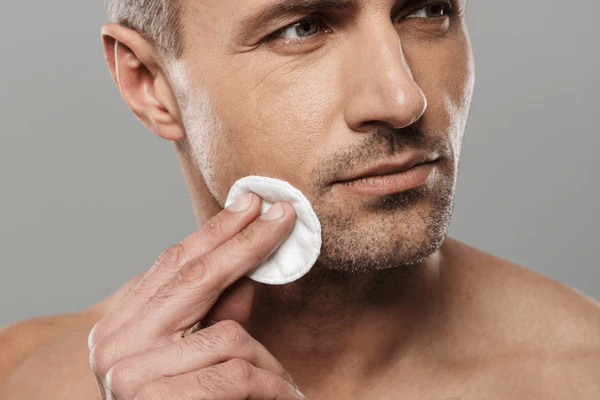
Aside from that, you can also go ahead with some physical exfoliation. That means a soft silicone scrub or a gentle cloth can be very handy, and that’s totally something you want to take into consideration.
What if you have some small cuts and nicks
Accidents happen, there’s no way around it. Thankfully, even if you have some cuts around the Adam’s apple area, that will not be very dangerous, unless they are extremely deep. Most of the time, you will encounter a lot of blood pouring, but that’s it, the cut will go away and the skin will heal itself. But if you do have bleeding cuts, rinse with cold water, apply some styptic pencil or alum block and then some small tissue squares.
What if you have razor burn? In that situation, you want to avoid using the options above. What you want to do is to opt for some aloe vera onto the skin, balm or cica creams or even hydrocortisone, if you can. Ingrown hair situations will need a warm compress so you can soften the skin, and maybe some salicylic acid so you can free the hair. Try to avoid squeezing or digging aggressively, that’s a huge issue and it will only lead to problems every single time. Make sure that you use any of the solutions based on what issue you are dealing with.
Frequently Asked Questions
Q: How do you shave over the Adam’s apple without cutting it?
A: Swallow and hold to flatten the area, stretch the skin to one side with your free hand, and shave over it with short, light strokes — never press down. A sharp blade and slick lather matter more here than anywhere else on the neck.
Q: Is it safe to shave over your Adam’s apple?
A: Yes, it is safe as long as you use proper technique: flatten the area, stretch the skin, use light pressure, and shave with the grain first. Nicks here bleed a lot but are rarely serious — styptic pencil or cold water stops them fast.
Q: Should you shave with or against the grain on the Adam’s apple?
A: Start with the grain using minimal pressure. Only attempt an against-the-grain pass once the area is fully lathered and flattened — and skip it entirely if your skin is irritation-prone.
Closing thoughts
Is it safe to shave over Adam’s apple? Absolutely, but you will need to take certain precautions. If you use the wrong tools and you press too hard, it’s possible to deal with nicks, cuts, inflammation, razor burn or other problems. Thankfully, it always comes down to using very little pressure and not rushing things too much. That’s why it’s highly recommended to try and not shave over Adam’s apple with lots of pressure. Instead, use the tips shown above, and it will provide you with a much better result and experience than expected!
2 responses to “How to shave over the Adam’s apple?”
[…] part is that it will also draw attention from patches. The neckline should usually be above the Adam’s apple. If you can follow the curvature of your jaw, that’s actually a great tip to keep in […]
[…] lip, which is sensitive, and thus it will need you to do some gentler strokes. When it comes to Adam’s apple, skin stretching is very much mandatory. And then there’s the neck, which has swirl patterns, […]