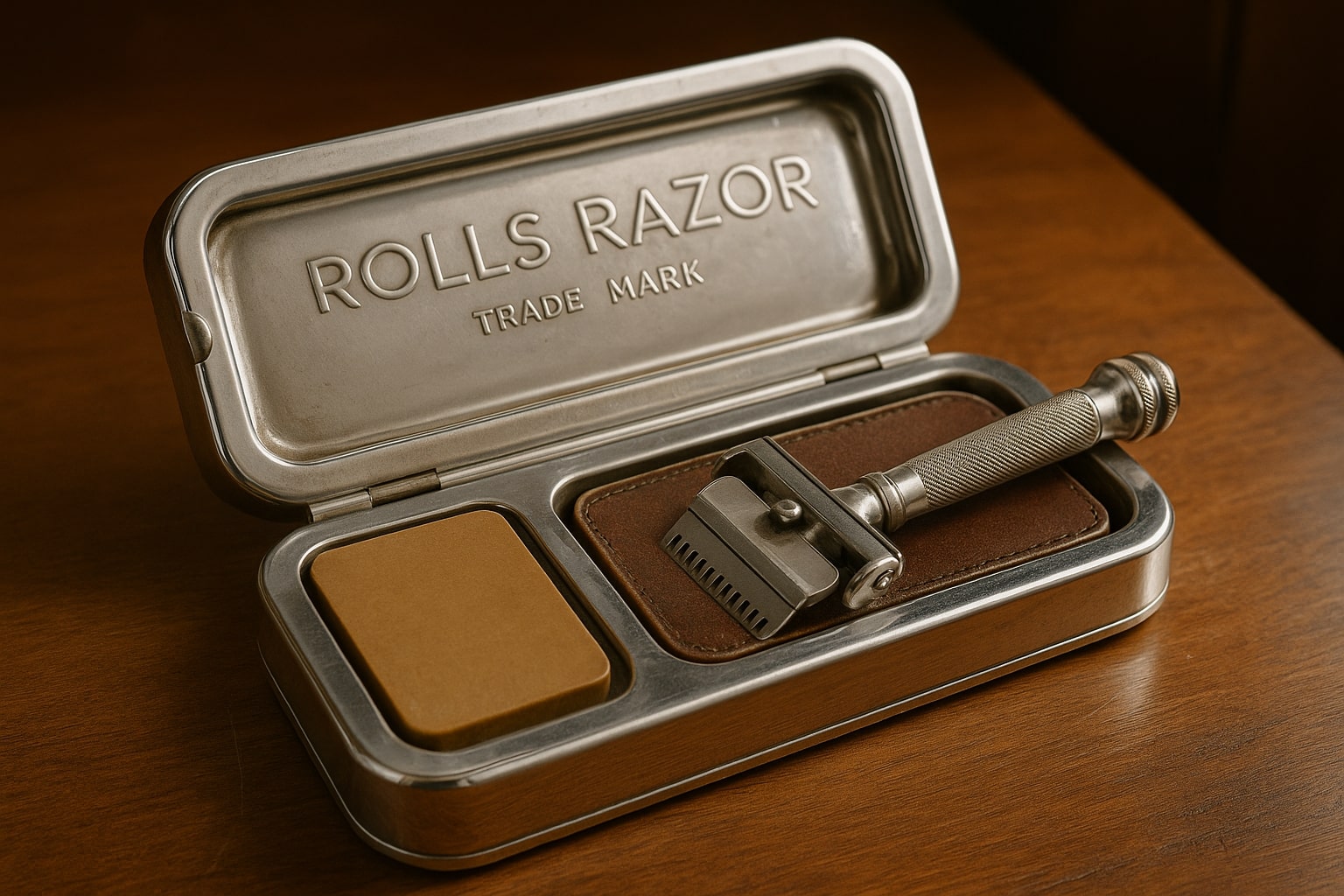
The Rolls Razor is one of those brands that has always focused on innovation and growth. Knowing what the Rolls Razor is and learning how to use one properly can be very beneficial. Originally, these razors combined the straight razor and the safety razor. The idea was to create a powerful and reliable shaving solution while implementing a cohesive system that was innovative, dependable, and easy to adjust to individual needs.
Things to know about the Rolls Razor
It’s important to understand what the Rolls Razor entails, along with its benefits and downsides. The product was first introduced by the company of the same name in the 1920s. As mentioned, the focus was on creating improved shaving methods through cohesive design.
The name “Rolls Razor” comes from the rolling action used to strop and sharpen the blade inside its case. It was the first self-sharpening shaving solution, which contributed greatly to its success. Before its introduction, men either had to visit a barber or use a separate hone and strop.
With the Rolls Razor, that was no longer necessary. The original design was patented by John Victor Mohn in 1927. Having a self-contained shaving system was clever and distinctive at the time, offering unique advantages. The ability to maintain a fixed blade that could be sharpened within the unit itself was revolutionary and pushed the limits of shaving technology in unexpected ways.
What does the Rolls Razor consist of?
Before deciding whether you should use a Rolls Razor, it’s important to understand its components. This is more than just a regular shaving tool — it’s a precision instrument.
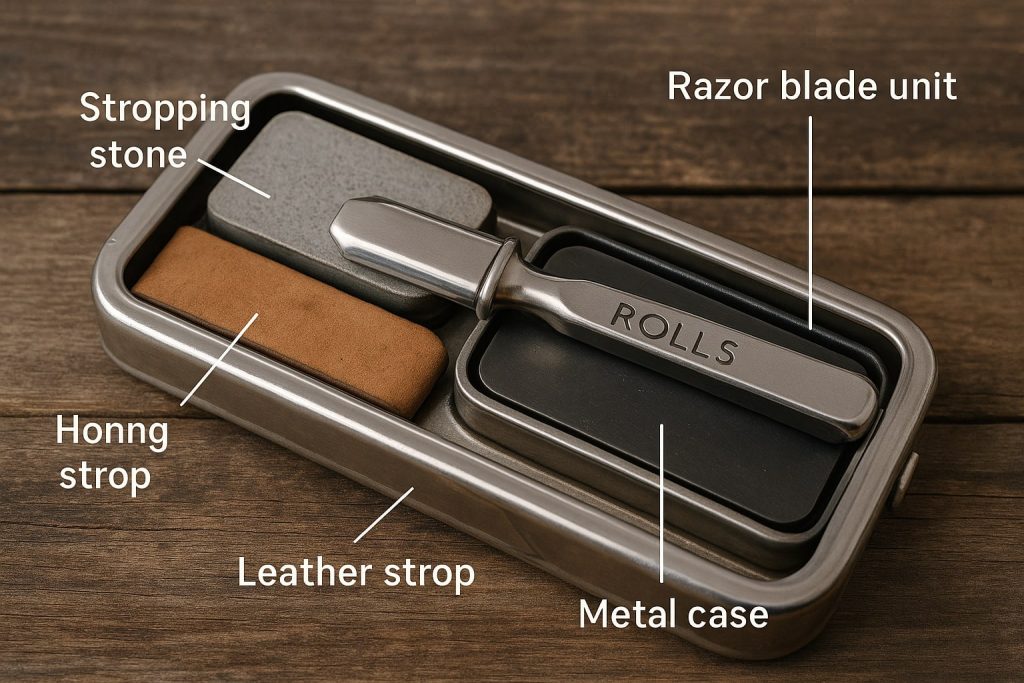
- Razor blade unit – A rigid, hollow-ground blade, often compared to a small straight razor.
- Stropping handle – Used to move the blade back and forth within the case for sharpening.
- Honing stone – Located on one side of the case lid, serving as the abrasive surface.
- Leather strop – Positioned on the opposite side of the honing stone inside the case.
- Metal case – Often nickel- or chrome-plated, sometimes featuring Art Deco designs, company logos, or decorative engravings. The craftsmanship elevated it beyond a simple grooming tool.
How do you shave with the Rolls Razor?
Once you understand what the Rolls Razor is, you may want to start using it. The process is somewhat ritualistic and requires attention to detail.
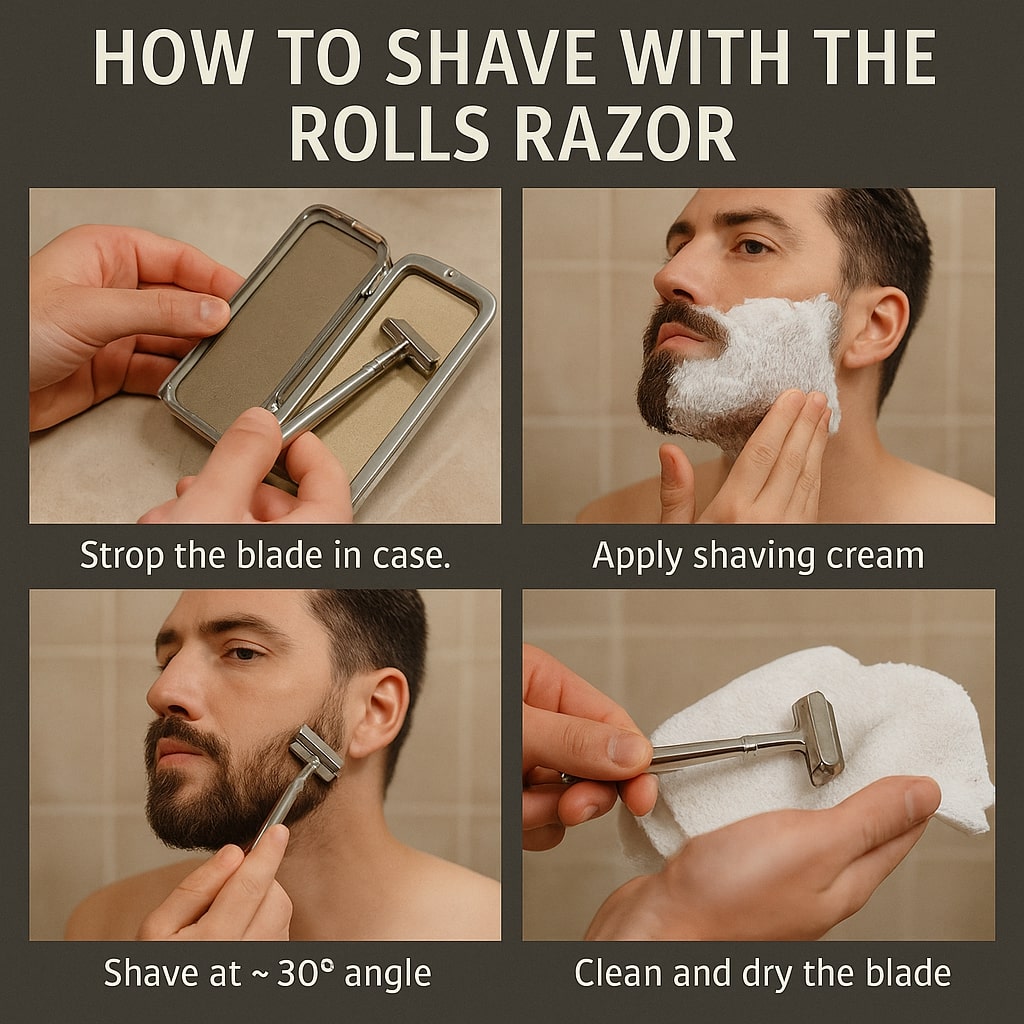
- Before shaving, prepare the blade with around 15–20 passes on the strop and up to 10 passes on the hone.
- Lubricate the skin properly. The Rolls Razor is not the most forgiving blade, so shaving cream or soap is essential.
- Apply light pressure while shaving. The blade is very sharp, so excessive pressure can cause injury.
- Maintain a shallow angle of about 30 degrees for consistent results.
- After shaving, clean and dry the blade thoroughly, then strop it again to maintain sharpness.
What actually determines a Rolls Razor's value
“How much is a Rolls Razor worth?” is one of the most searched questions about this razor, and the honest answer is: it depends entirely on condition and completeness. There is no reliable price list — check eBay’s *sold* listings (not asking prices) for whatever model you have, and you’ll see the real market. That said, here’s what moves the needle:
Blade condition matters most. A blade with a clean, unchipped, rust-free edge that’s been properly honed is the whole game. A pitted or chipped blade drags the value down regardless of how pretty the case is.
An intact hone. The stone in the lid is irreplaceable in the practical sense — a cracked hone can’t be repaired, and a razor with a cracked hone is a display piece or a parts donor until the lid is replaced.
Strop condition. Dried, cracked, or missing leather is common and fixable — replacement leather can be fitted — but an original supple strop in good shape adds value.
Case and completeness. Chrome or nickel cases in good plate, crisp engravings, the original box, instructions, and strop dressing all help. Rare variants (pre-1930 gold plate, wartime aluminium) command premiums when genuine.
The bottom line: a complete, honest Imperial No. 2 with a good blade and intact hone is a usable razor with real collector interest; a cosmetically rough incomplete set is a fun restoration project. Price it — and buy it — accordingly, based on sold listings for the same model in the same condition.
The part nobody tells you: your eBay Rolls almost certainly isn't shave-ready
The instructions above make it sound simple — strop a few passes, hone a few more, and shave. In practice, there’s a step zero that decides whether the whole thing works, and it’s the one that trips up nearly every new Rolls owner.
A blade that’s been sitting in a drawer for forty years is not shave-ready. It may look fine and still be dull, micro-chipped, or lightly rusted in ways you can’t see. And here’s the uncomfortable truth about the ingenious self-contained case: the little hone inside it is a maintenance tool, not a restoration tool. It’s roughly equivalent to a fine finishing stone — perfectly good for keeping a sharp edge sharp, but not capable of bringing a dead edge back to life. Expecting the case hone to rescue a dull vintage blade is the single most common reason first shaves with a Rolls are miserable.
So before your first shave:
Inspect the blade. Hold it under a bright light and look along the edge. Chips, visible nicks, or heavy rust mean the blade needs professional help. Light discoloration on the flat is cosmetic; damage on the edge is not.
Get it honed properly — once. Send the blade to someone who hones straight razors, or hone it yourself on real stones if you already do that. This is the step that transforms the razor. After a proper honing, the case’s own hone and strop genuinely maintain the edge for a long time — many users strop 40–60 passes before each shave and touch up on the case hone weekly.
Revive the strop. The leather in the lid is often dried out. Work in a little neatsfoot oil (or, in a pinch, plain unscented moisturizer — leather is just skin) and let it absorb overnight, then wipe off the excess. A supple strop is the difference between maintaining an edge and just going through the motions.
Check the hone for cracks. A cracked hone can’t be repaired, and honing on one damages the blade — if yours is cracked, you’ll need a replacement lid or an external stone.
The unique design of a Rolls Razor
Although the core design remained consistent, Rolls Razors evolved over time. Improvements reflected changing consumer tastes and advancements in manufacturing.
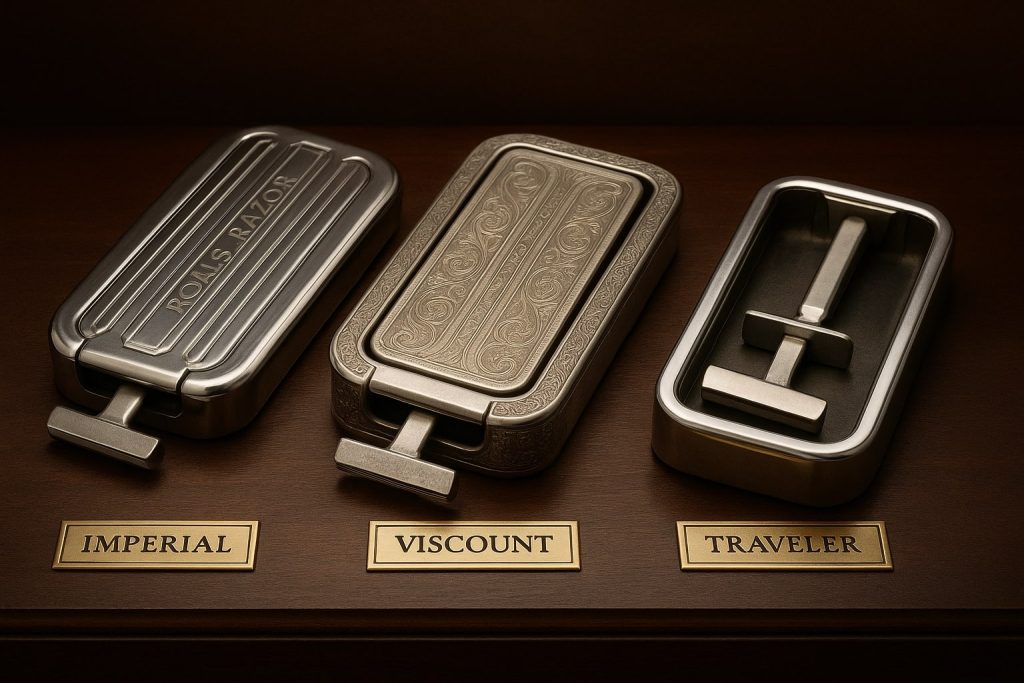
- Imperial – Featured a chrome-plated case.
- Viscount – Known for its engraving and streamlined design.
- Traveler – A compact version designed for explorers and businessmen who needed a portable shaving solution.
Each variation maintained the brand’s emphasis on quality and craftsmanship.
How to date your Rolls Razor
The model names tell you what you have; the case details tell you when it was made. Here are the markers collectors use, roughly in chronological order:
No Greek key pattern, pebble-finish case — the earliest razors, pre-1930. If the case has no zig-zag or key decoration at all, you’re looking at one of the first production runs.
Gold-plated case — made before 1930 and very rare. If you think you have one, it’s worth a careful second look, because this is the variant fakes and wishful thinking cluster around.
Aluminium case — Second World War production, when nickel and chrome were reserved for the war effort. Lighter than you’d expect and historically interesting.
Nickel-plated Imperial No. 2 — the most common Rolls by a wide margin. If you bought a random Rolls online, this is probably what arrived.
Viscount — the softer, rounder case with a single row of Greek key patterning. Later production.
Three-row Greek key with “The Whetter” trademark — later still. And if the strop in the lid is synthetic rather than leather, you have one of the very last models made before production ended in 1958.
None of this changes how the razor shaves — the mechanism stayed essentially the same for three decades — but it tells you what you’re holding, which matters if you’re collecting, insuring, or just curious about the thing on your shelf.
Why do people love the Rolls Razor?
There are many reasons why customers gravitate toward the Rolls Razor. For many users, the value lies not only in the design but also in its unique shaving experience.
- It is more convenient than a traditional straight razor, which can be more dangerous in inexperienced hands.
- Early safety razors lacked refinement, something the Rolls Razor addressed with a more professional and polished design.
- It is economical and sustainable. Unlike disposable blades, the Rolls Razor is built for long-term use.
Its engineering surpasses many alternatives, offering precise grooming and long-term value. Marketing campaigns emphasized durability and the concept of “the razor that sharpens itself.” At the time, this was a highly attractive feature.
These razors were often purchased as gifts but were also bought by men who appreciated their quality and craftsmanship. While modern shaving options are abundant, the Rolls Razor continues to stand out for its durability and distinctive experience.
What Are the Main Competitors?
Today, there are many competitors. Electric razors, disposable blades, and changing grooming preferences have reshaped the market.
However, several groups still value the Rolls Razor:
- Purists who prefer traditional shaving methods over electric options.
- Collectors who admire the engineering quality and craftsmanship.
- Enthusiasts of vintage design who display the razors for their aesthetic appeal.
- Restoration hobbyists who polish cases, replace damaged strops, and hone blades using modern materials like diamond paste.
For many, the razor’s appeal lies in its historical significance and mechanical ingenuity.
Cultural Symbolism
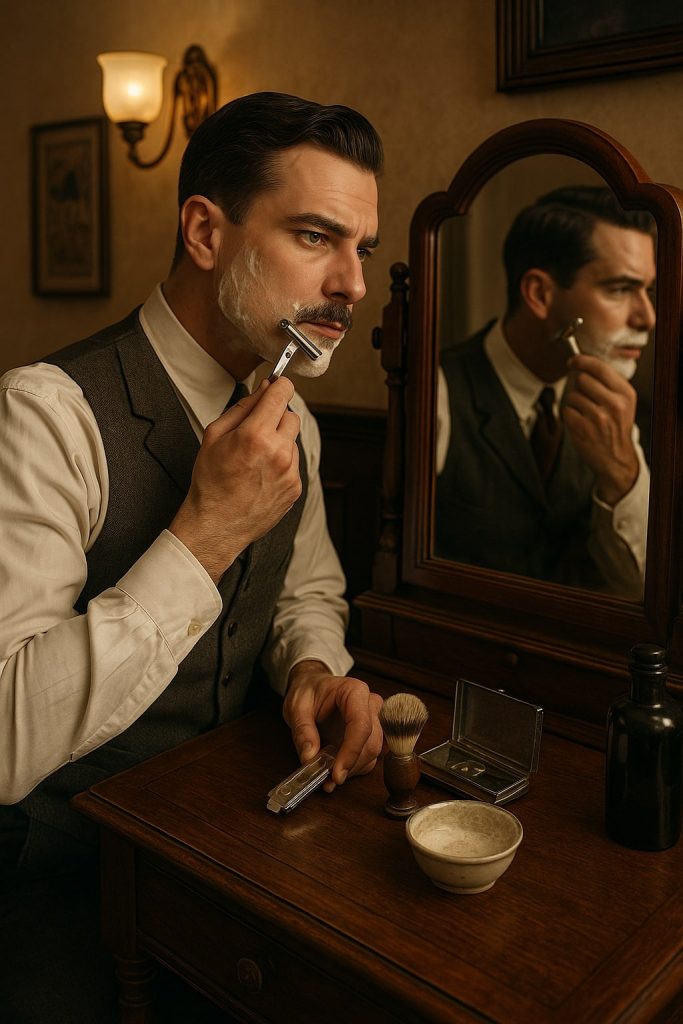
The Rolls Razor was more than just a grooming tool. It symbolized self-respect, dignity, discipline, and professionalism. The brand has long been associated with elegance, innovation, and durability.
Even today, these razors are appreciated not just for their functionality but also for their inspirational and historical value.
Frequently Asked Questions
Q: What company made the Rolls Razor?
A: The Rolls Razor was made by Rolls Razor Ltd. of London, England, starting in the 1920s. The company built its reputation on the razor’s ingenious self-contained design, with a built-in strop and hone inside the case.
Q: Where can I buy Rolls Razor blades?
A: Rolls Razor blades are no longer manufactured, so you won’t find new ones in stores. Check vintage markets like eBay and Etsy, shaving forums, and antique shops — look for blades without chips or heavy rust.
Q: How does a Rolls Razor work?
A: It pairs a straight-razor-style blade with a safety guard, all housed in a metal case containing a leather strop and honing stone. You strop and hone the blade inside the case, keeping it shave-ready without any extra equipment.
Conclusion
Overall, the Rolls Razor remains an impressive product that continues to be used and collected worldwide. It provides consistency, excellent results, and a distinctive shaving experience. For anyone seeking a high-quality, traditional grooming tool, the Rolls Razor remains a compelling choice. It’s never too late to refine your shaving habits, and using a Rolls Razor can certainly elevate the experience.
Forget 30 degrees: the Rolls shaves like a straight on a stick
The “how to shave” section above suggests a 30-degree angle, which is the standard advice for a double-edge safety razor. It’s the wrong instinct for the Rolls — and it’s worth correcting, because it’s exactly what makes first shaves with this razor feel scary.
The Rolls blade has no guard comb and no safety bar worthy of the name. It’s a rigid, hollow-ground wedge — functionally a short straight razor mounted on a handle. Straight-razor users will recognize the right angle immediately: nearly flat against the skin, spine close to the face, letting the edge do the work. Many experienced Rolls shavers describe having to actively unlearn their DE muscle memory, which keeps trying to lift the handle to 30 degrees.
So: start with the blade almost flat on your cheek and increase the angle only until it starts cutting. Keep pressure at zero — the blade is heavy and wickedly sharp, and it needs no help. Short strokes, slick lather, and patience. Once the angle clicks, most users report the Rolls feels less scary than it looks, precisely because there’s no flex and no surprises — just a solid, unyielding edge.
One response to “Rolls Razor”
[…] you might already know, coarse and dry hair are the main enemies of razor blades. And especially on the neck, the hair tends to grow thick, and it will curl sharply. What you want […]