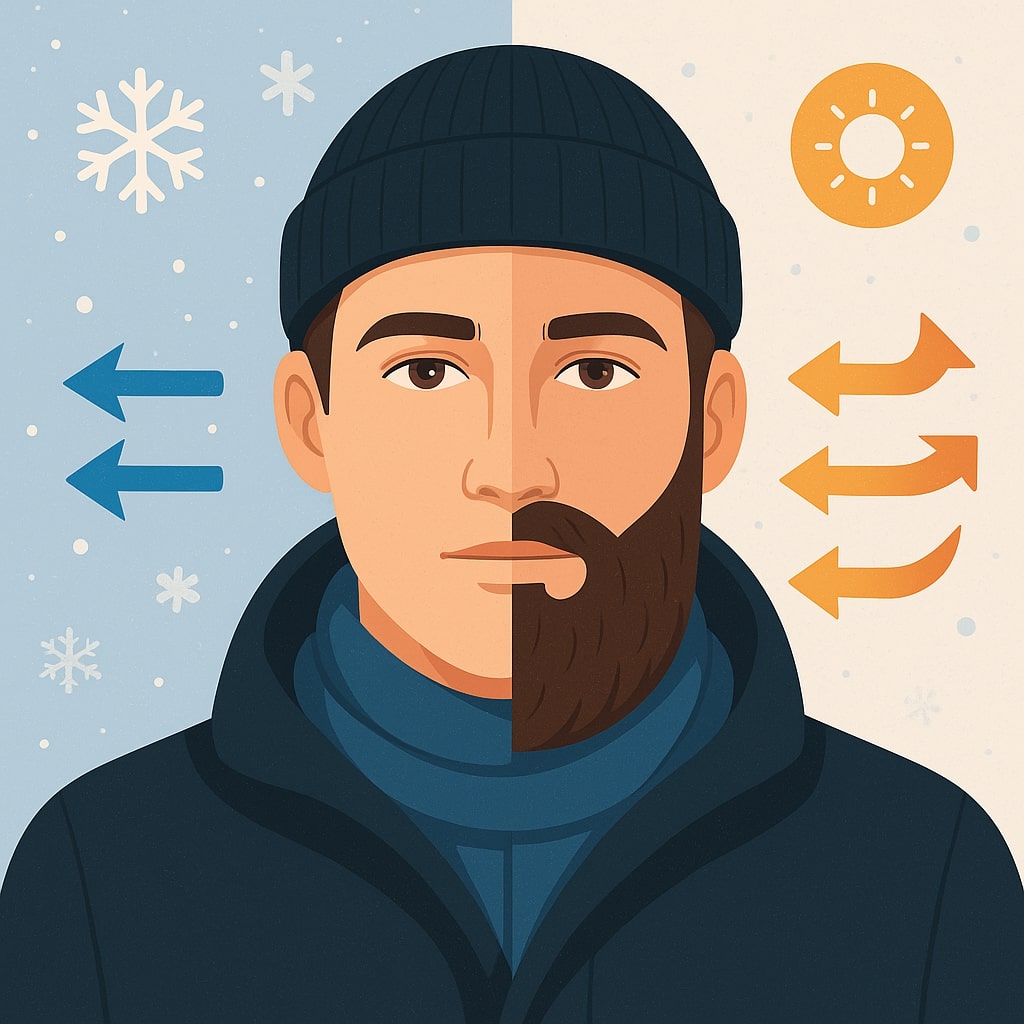
One of the main questions that a lot of people have is, “does a beard keep your face warm”? It’s easy to see why many have such a question, because having a beard is a commitment. Some have it because they want to stay true to their culture. Others just like the look of it. But in the end, you do want to see if the beard keeps your face warm or if it’s just a myth. Knowing that can indeed make a huge difference, so here’s what you want to know.
Why do people have facial hair in the first place?

Naturally, it came down from an evolutionary standpoint. Especially in the early days, human didn’t know that they could shave, and it was natural at that time. In fact, it even brought sexual selection, since women were choosing men with beards at the time. That being said, beards also offer protection against the elements, such as UV rays or cold. And on top of that, beards were the ones that signaled social status. For example, they were used as a sign of hierarchy. And while things have changed here and there, realistically, men still enjoy having a beard. It’s a cool look for sure, and it pushes the boundaries when it comes to visuals and style.
Does hair retain heat?
The question does hair retain heat is very common, and the main reason comes from insulation. In the early days of humanity, it was difficult for people to stay alive and survive the elements. Every single element that could offer protection from heat or cold was important. And yes, beards were important back then. Beards provide great insulation, and that can be extremely important.
 The way insulation works in a beard is that hair will trap air in between its strands. What it does is it creates a layer of warm air. It’s the same principle used by jackets these days, which have a layer of insulation.
- Another thing to note here is that wind will not accelerate through your beard. That’s important because it protects you from heavy winds, which is crucial in survival situations.
- We can also add the fact that facial hair reduces how much heat and moisture gets lost from the skin. That’s a crucial aspect, because a lot of men without beards end up losing tons of moisture and heat. With a beard, it’s a lot easier to retain that heat. It becomes crucial, especially in cold places.
Does the beard length and density matter?
Start Growing in Autumn: A Winter Beard Is Planned, Not Rushed
Here’s the mistake a lot of men make: they decide in December that they want a warm winter beard, and then wonder why it isn’t doing much by January. A beard that actually insulates takes months to build — and winter is the slowest season for growing one.
Beard growth follows a seasonal rhythm: it runs slowest in the dead of winter (January and February are the low point) and accelerates toward summer. That means if you start growing in December, you’re fighting biology the whole way. The practical move is to start in mid-to-late autumn. Give yourself eight to twelve weeks of uninterrupted growth before the real cold arrives, and you’ll hit December with a beard that’s thick enough to trap air and block wind — which is the whole point.
This also means resisting the urge to “clean it up” in November. Early growth looks uneven and patchy on almost everyone; trimming it back to look tidy just resets the clock. Let it grow through the awkward phase, keep the neckline defined so it still looks intentional, and do your shaping in late winter instead.
Think of it like winter tires: you don’t buy them during the first snowstorm. A winter beard is seasonal equipment, and seasonal equipment gets prepared ahead of the season. Start in autumn, and by the time the wind turns bitter, your face is already dressed for it.
Does the beard length and density matter?
Yes, it does. If you just have stubble beard, that offers no protection. If anything, stubble will even increase the cold perception, since it will reach your skin with ease. However, a shorter beard will provide some wind protection, yet the insulative properties are very much limited, so keep that in mind.
A long, thick beard will offer the best warmth and more protection, so that’s maybe the best option you can get. As we said, it’s not going to replace adequate winter clothing, but it’s definitely a plus when compared to shorter beards or a stubble beard. From a warmth retention, things will be similar here. Beard density does matter, same as its length, the longer it is, the more warmth you can retain.
One of the things we have to keep in mind is what type of air you’re dealing with. Obviously, still air and chill winds are quite different. Wind is taking away heat from the skin, and that can be problematic. But if you have a beard, things are definitely a whole lot better. You have a barrier against things like frostbite and windbreak. On top of that, it helps against cold air, something that can prove to be incredibly helpful, especially in the long term. That’s what makes it such an amazing option to take into account, if you want to keep your face warm during the winter.
Do you feel warmer if you have a beard?
Even if the temperature difference is not very high, the truth is that perceived benefits can prove to be a lot better. And that’s because your brain sees the facial hair as a great cover, and that can prove to help deliver that sense of comfort. Plus, it’s also self-soothing, and these things alone are a game-changer a lot of the time. Even if it doesn’t physically change the temperature that much, the fact that you can perceive warmth will help quite a bit. And that alone is certainly something to think about here.

There’s a reason why many cultures have been known to sport a beard. It wasn’t just for the look. Vikings were portrayed with large beards for a very long time, and they were living in harsh environments. Russians were also wearing facial hair, mainly because of the places where they were living. Same with Inuit men, they were sporting a beard, and that alone was proved to be extremely useful for them due to the environment.
Are there situations where beards won’t help?
Of course, beads can do so much with this type of stuff. Your focus needs to be on narrowing down on keeping warm clothes with you. Beards will not provide excellent protection against the cold all the time. Yes, they help a little, but they also have some challenges.
- For example, beards bring moisture retention. That means water turns into ice crystals in your beard, which could make your beard colder, something that can prove to be a problem more than anything else.
- Then, there’s the freezer burn effect. In some cases, if it’s very cold outside, ice might draw heat from the skin. All of that leads to discomfort, and it can prove to be very challenging a lot of the time.
- Not only that, but frozen beards can lead to hygiene problems. A frozen beard is uncomfortable to deal with. And it will only get worse the more you stay in the cold. It’s simple stuff like that which can end up being a problem.
The Mustache Freeze: The One Winter Problem Nobody Warns You About
Ask bearded men what winter is actually like and you’ll hear the same complaint everywhere: it’s not the cheeks that suffer — it’s the mustache. Every breath you exhale carries warm moisture, and in freezing air that moisture condenses right onto the hair above your lip. The result is a mustache that slowly turns into a row of tiny icicles. As one college student put it in a campus interview: “sometimes there is ice on my beard, so that makes it colder.”
It’s uncomfortable, it looks ridiculous, and yanking the ice off pulls hairs with it. Here’s how to handle it in practice:
Dry it before you go in and out. The freeze-thaw cycle is what does the damage. When you come inside, gently pat the mustache dry with a tissue or cloth instead of letting it melt and refreeze on your next trip out.
Balm is your friend. A thin layer of beard balm on the mustache before heading out does two things: it adds a light water-resistant coating that slows moisture absorption, and it keeps the hairs from clumping into ice-bound spikes.
Brush, don’t pull. If ice has already formed, work it out gently with a small brush or your fingers. Pulling frozen hairs breaks them, and broken mustache hairs stick out at odd angles for weeks.
Consider going shorter on top. In deep winter, many men trim the mustache slightly shorter than usual — less hair above the lip means less surface for breath moisture to freeze onto. It’s a small trade-off that makes January noticeably more comfortable.
Is having a beard better than wearing a scarf or a face mask?
Naturally, you are always thinking about ways to protect yourself as much as possible. Beards have moderate wind resistance and low to moderate warmth. However, the moisture barrier is poor, even if the comfort is high. It could be a good option if you live in a colder habitat, as it does help more than expected.
Scarves have good warmth and wind resistance, medium comfort, and their moisture barrier is moderate, quite good when compared to just having a beard. A face mask is also offering moderate to high wind resistance, same with warmth. The moisture barrier, just like comfort, are at a medium level.
Regardless of which of these you want, the truth is that nothing can be a substitute for adequate gear. That’s especially true in the case of sub-zero temperatures or any environment with tons of winds. It makes a lot of sense to invest in proper gear to protect you against the cold. Otherwise, it will be difficult to stay safe, and that’s a thing to consider if you are going to deal with low temperatures. Even if having a beard helps, you still want to focus on getting the best possible protection and avoid any issues.
What should you do to protect your beard during the winter?
Naturally, there are different things you can go for. But we made a quick list to provide you with all the insight and info that you may need. Here’s what you should focus on:

- A good idea is to try and keep the beard dry and clean. When you want to ensure that your beard keeps the face warm, cleaning it can make a huge difference.
- Another good rule of thumb is to use beard balm and oil. These are great products that prevent your beard from freezing or cracking, and that can be extremely important to keep in mind.
- Brushing often also comes in handy. If you brush your beard, that helps distribute the natural oils adequately. And in doing so, you also distribute the warmth, which can be extremely helpful here.
- Of course, you also want to allow your beard to grow naturally. Trimming is ok, but during the winter months, avoid trimming it too much. Otherwise, it can lead to issues, and that’s something you want to avoid.
- We also recommend trimming some of the neckline. While trimming might not be ideal during cold times, the truth is that you do want to trim the neckline the best way that you can. Not only will it help you obtain more comfort, but it will also enhance your look. Without this type of trim, the beard won’t look as good, and that’s something to think about.
Wash Smarter, Not More, in Winter
Winter dryness in a beard usually isn’t caused by the cold alone — it’s caused by how we wash. Two habits do most of the damage, and both are fixable this week.
First: the hot shower. Nothing feels better than a scalding shower on a freezing morning, but hot water strips the natural oils out of both your beard hair and the skin underneath it. What you’re left with is dry, brittle hair sitting on dry, itchy skin — the exact opposite of the healthy, insulating beard you want. You don’t need to suffer through cold showers; just turn the temperature down to lukewarm when you wash your face and beard, and keep the truly hot water for the rest of you. Cooler water also helps the hair cuticle lie flat, which keeps moisture locked in.
Second: overwashing. In summer, a daily beard wash makes sense. In winter, washing every day with any kind of soap — even a gentle beard wash — gradually depletes the oils your beard needs to stay supple. Most men do better rinsing with water daily but using an actual wash only two or three times per week in the cold months. On the in-between days, water plus a light application of beard oil is plenty.
Third, and most overlooked: dry it completely. Beard hair holds onto water far longer than the hair on your head. Walking out into freezing air with a damp beard is asking for the ice-crystal problem described above — and as it dries, minerals in hard tap water dry onto the skin underneath, making it feel rough and tight. After washing, towel-dry thoroughly, then finish with a few minutes of a blow dryer on low heat if you’re heading out. It feels like overkill the first time. By February, it’ll be habit.
Does the beard color matter?
Some people might wonder if the beard color matters here as well. Dark beards are known to absorb more solar heat, so you will end up warming your face in the sunlight a lot quicker. Light beards, on the other hand, are reflecting light, so you are getting more passive warmth. Even if these are not major things to keep in mind, they do affect things, even a little bit.
If you shave your beard, that can end up being a problem, for many reasons. For starters, you have sudden exposure to the elements for your sensitive skin, which can lead to discomfort and all kinds of problems. You also lose the insulating layer, which can become a problem a lot more than you realize. There’s also the psychological shock that comes with this kind of stuff, and all of that is a crucial thing that you need to consider the best way you can. At the end of the day, you will feel colder, even if beards aren’t exactly as good as protective equipment.
Even athletes choose to grow beards because they reduce skin exposure, they get UV protection and wind deflection. All those little things will matter, and that’s certainly a thing to consider.
At the end of the day, the most important thing is to make sure that you protect yourself the best way you can, and a beard can be a major part of that process.
Does the beard color matter?
Some people might wonder if the beard color matters here as well. Dark beards are known to absorb more solar heat, so you will end up warming your face in the sunlight a lot quicker. Light beards, on the other hand, are reflecting light, so you are getting more passive warmth. Even if these are not major things to keep in mind, they do affect things, even a little bit.
If you shave your beard, that can end up being a problem, for many reasons. For starters, you have sudden exposure to the elements for your sensitive skin, which can lead to discomfort and all kinds of problems. You also lose the insulating layer, which can become a problem a lot more than you realize. There’s also the psychological shock that comes with this kind of stuff, and all of that is a crucial thing that you need to consider in the best way you can. At the end of the day, you will feel colder, even if beards aren’t exactly as good as protective equipment.
Even athletes choose to grow beards because they reduce skin exposure, they get UV protection and wind deflection. All those little things will matter, and that’s certainly a thing to consider.
At the end of the day, the most important thing is to make sure that you protect yourself the best way you can, and a beard can be a major part of that process.
Closing thoughts
So, does a beard keep your face warm? Yes, it does, but it also comes with certain limitations. You have mild insulation, wind protection that will help reduce any sting related to cold air, but also the psychological comfort that comes from having a beard in the first place. However, there’s also the fact that a beard can only do so much when it comes to protecting you.
It’s still important to invest in good, protective equipment, if you choose to venture into cold areas. The more you focus on that, the better it will be. At the end of the day, what matters is how you approach everything and how you adapt to the situation. If you do it adequately and also take good care of your beard, that alone can prove to be a game-changing approach. So yes, you should have a beard if you venture into cold areas, as it will help protect your skin. Yet at the same time, it’s a good idea to learn of any limitations as well.
Frequently Asked Questions
Q: Does a beard keep your face warm?
A: Yes, to a modest degree. Facial hair traps a thin layer of still air against the skin, which provides light insulation and cuts wind chill on the cheeks and jaw. It helps — but it is no substitute for a scarf or proper winter clothing in real cold.
Q: Do beards keep you warm in winter?
A: A little. A thick, dense beard insulates better than patchy stubble because it traps more air and blocks more wind. Think of it as a light windbreaker for your face, not a winter coat.
Q: Does beard length matter for warmth?
A: Yes. Longer, denser beards trap more insulating air than short stubble, so they feel noticeably warmer in cold wind. Length matters more than style here.
One response to “Does a beard keep your face warm?”
[…] you want to wash your face with some warm […]