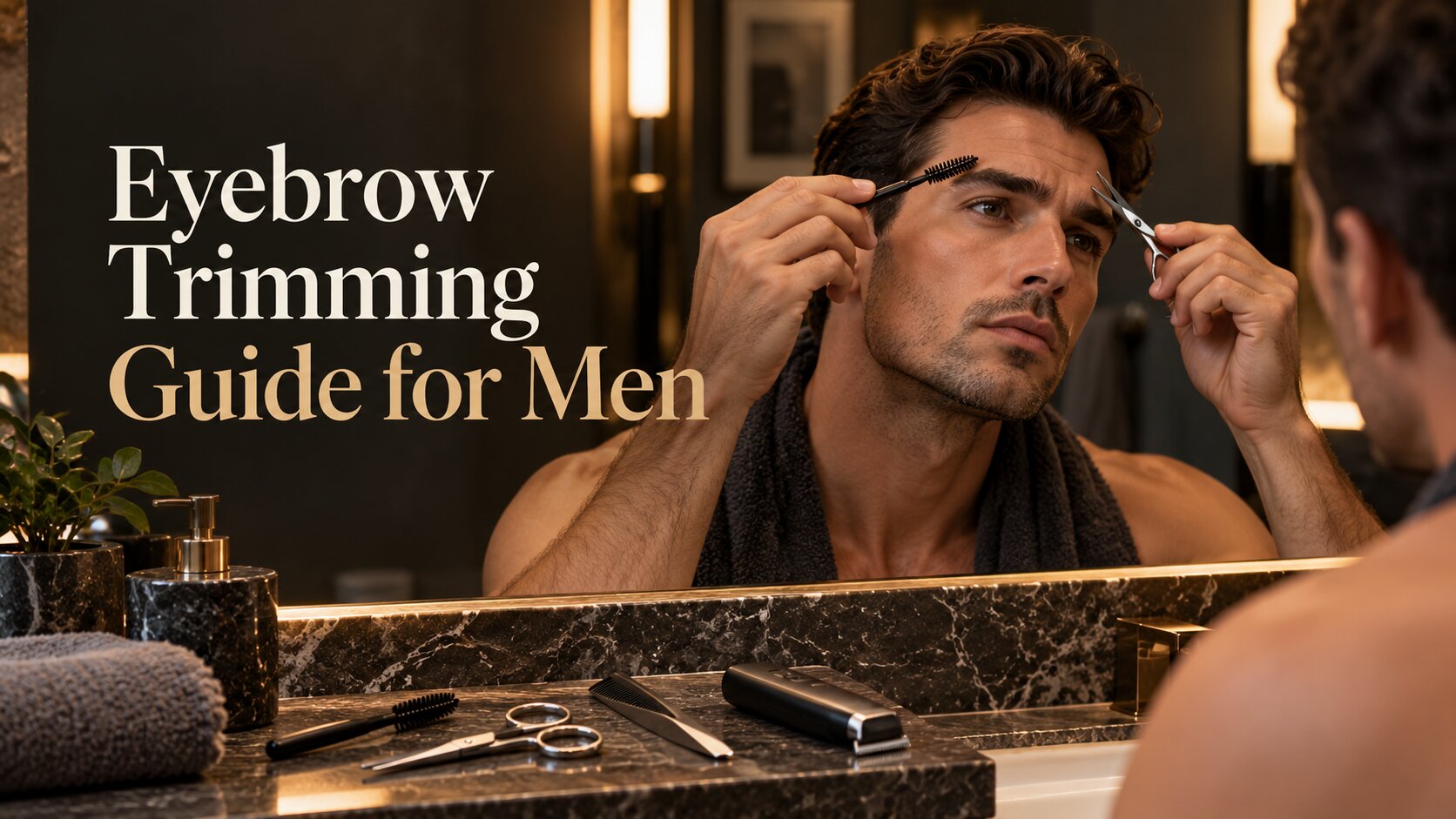
Look in the mirror and be honest: when did your eyebrows last get any attention? For most men, the answer is never — and it shows. Overgrown, unruly brows can make even a sharp haircut and a clean shave look unfinished. The good news: learning how to trim eyebrows as a man takes about ten minutes, needs almost no gear, and the difference is immediate.
This guide covers everything — the tools, how to map your brows so you don’t ruin them, the step-by-step trimming method, and how to fix it if you go too far. No salon visit required, no overdone Instagram-brow look. Just clean, natural brows that look like you on your best day.
Should Men Trim Their Eyebrows?
Short answer: yes, if they’re getting long, wild, or joining in the middle. Trimming eyebrows is normal men’s grooming in 2026 — surveys consistently show most men now do at least some brow maintenance, even if they’d never admit it at the barbershop.
There’s a difference between grooming and styling, though. Nobody’s suggesting you sculpt high arches or thin them into lines. Men’s eyebrow grooming means removing the chaos while keeping the masculinity: shorter strays, a clean space between the brows, nothing that looks “done.” Think of it like trimming nose hair — basic maintenance, not a makeover.
If the hair between your brows is the main problem, start with our full guide to dealing with a unibrow, then come back here for the brows themselves.
What You’ll Need
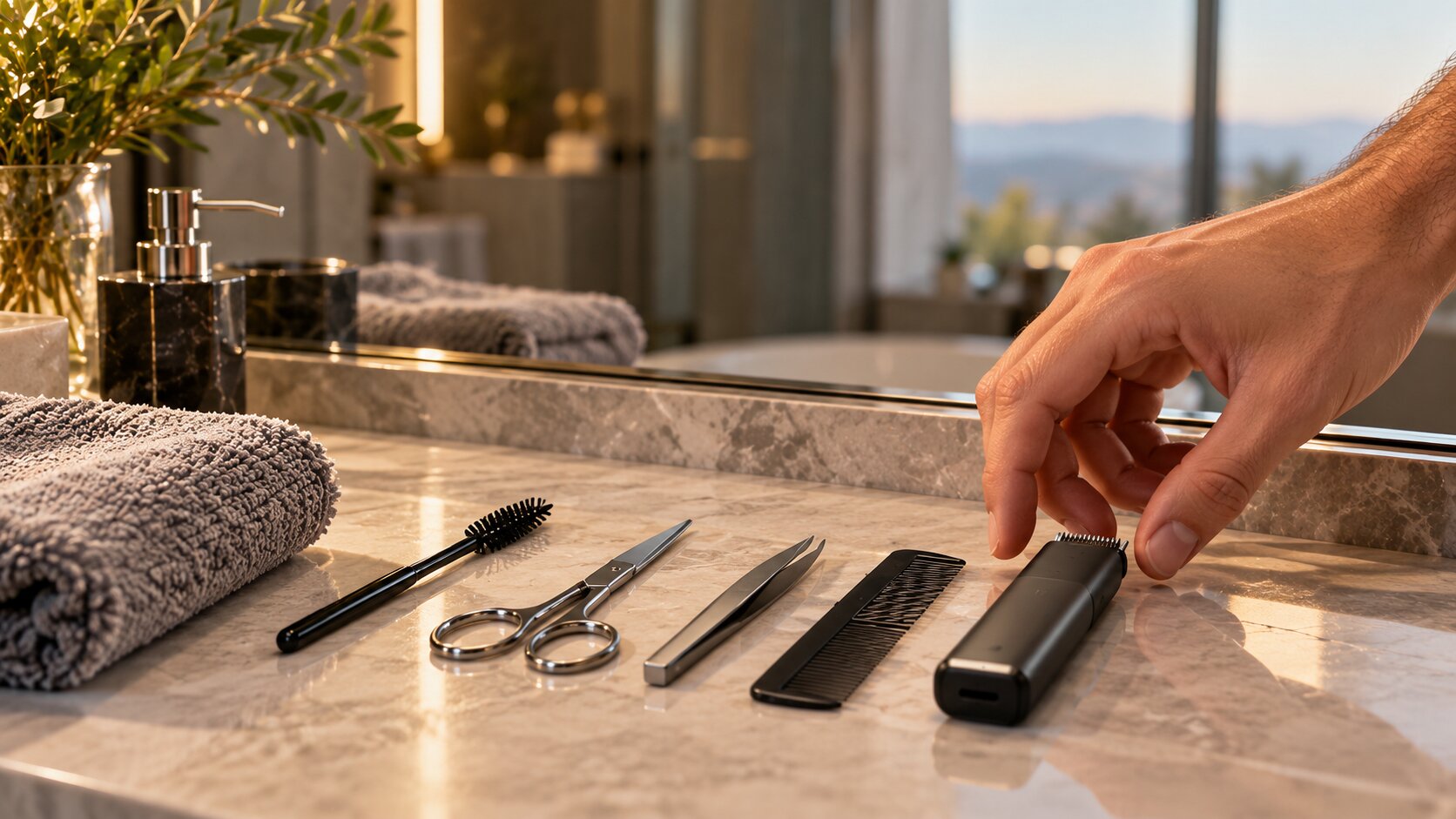
You don’t need a kit. Four things cover 95% of men’s brow maintenance:
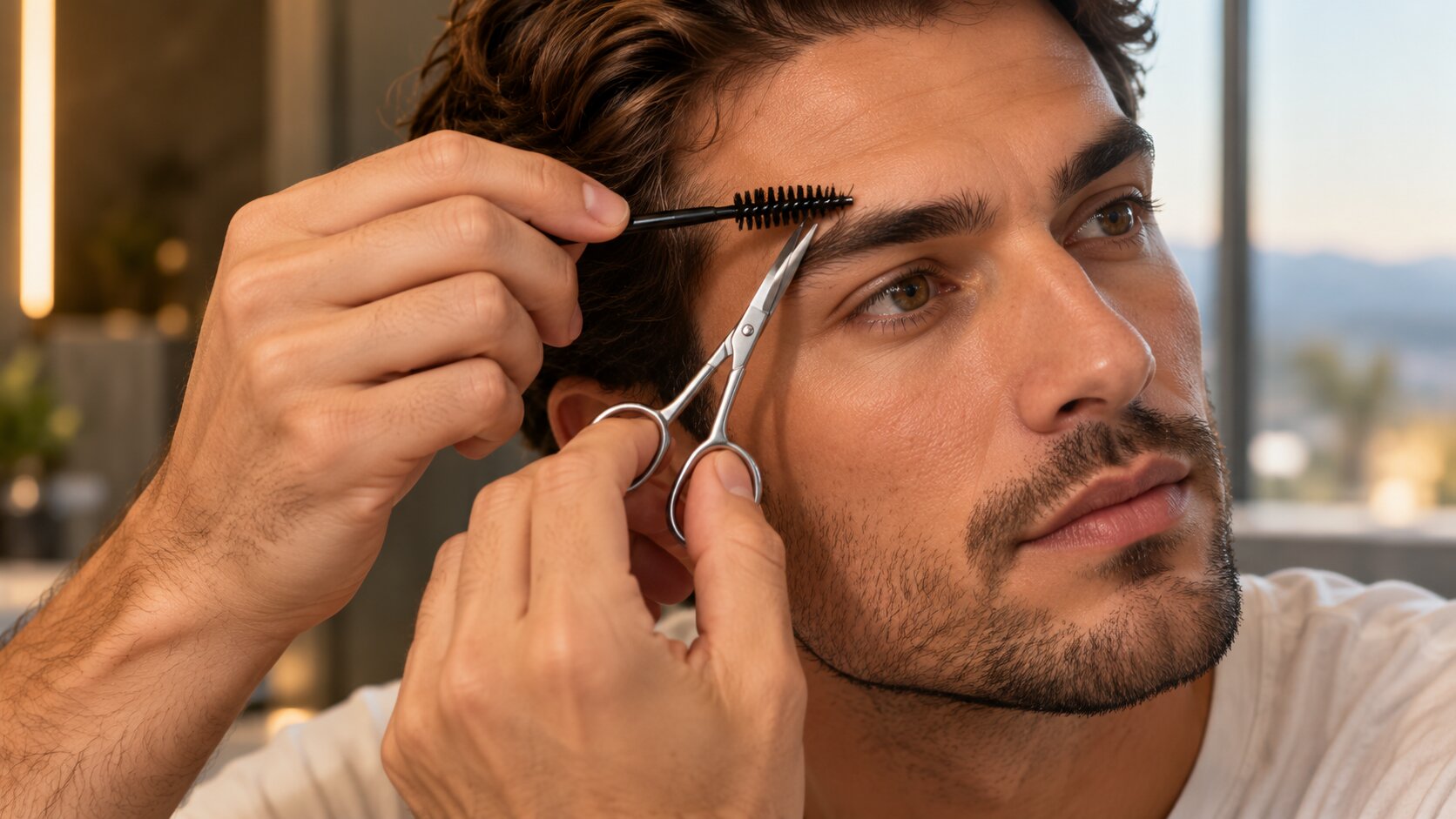
- A spoolie or fine-tooth comb. A spoolie is the little mascara-wand brush; a fine comb works too. This is the most important tool — it lifts hairs so you cut only what sticks out.
- Small, sharp scissors. Brow scissors, cuticle scissors, or even nail scissors with a straight edge. Big kitchen scissors need not apply — you want control, and eyebrow cutting for men is all about taking a little at a time.
- Slant-tip tweezers. For the strays between and below the brows. Get a decent pair with aligned tips; cheap tweezers that can’t grip a hair will just make you angry.
- Good light and a regular mirror. Use a normal mirror, not a magnifying one — magnification makes every hair look like a crisis and leads to over-plucking.
Optional but useful: an electric trimmer with a small precision head or guards. And here’s a crossover most guides miss — if you already wet shave, a precision razor or shavette (the kind barbers use for edging) is excellent for cleaning up around the brows. More on that below.
Know Your Brow Map Before You Touch Anything
Most brow disasters come from cutting without a plan. Take sixty seconds to map yours:
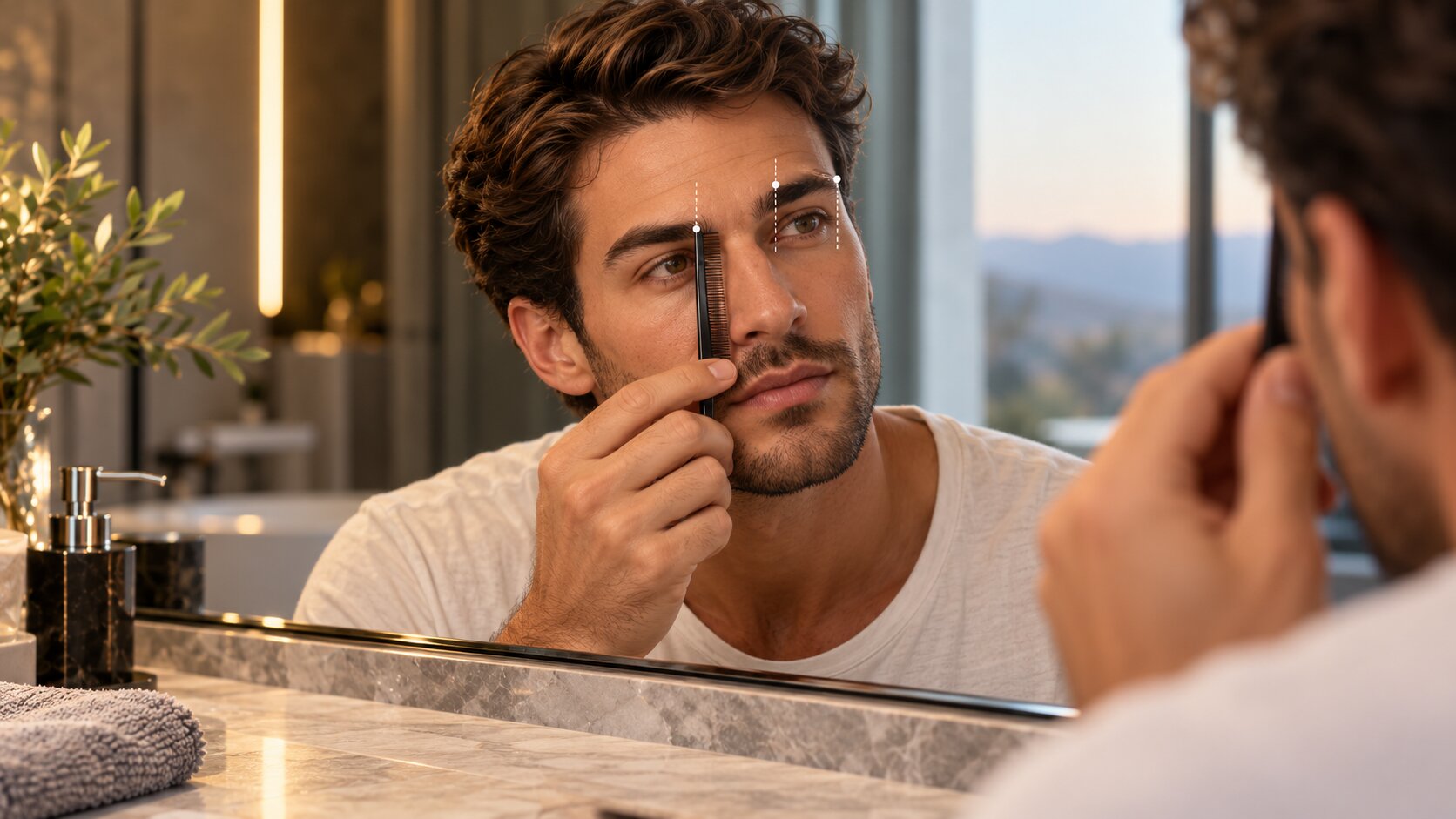
- Where each brow should start: Hold a comb vertically against the side of your nose. Where it crosses your brow is your start point. Hair growing closer to the nose than that line — between the brows — is fair game.
- Where each brow should end: Angle the comb from the edge of your nostril past the outer corner of your eye. That’s roughly where the brow should taper out. Don’t extend past it.
- The arch: For men, the arch should be subtle — almost flat with the faintest lift about two-thirds of the way out. You’re not creating an arch, you’re keeping the one you have.
The golden rule of men’s brow grooming: leave the top edge of the brow alone. Almost all cleanup happens below the brow and between the brows. The top line is what keeps brows looking masculine — mess with it and brows start looking shaped, which is exactly what we’re avoiding.
How to Trim Eyebrows: Step by Step
This is the core method for trimming eyebrows for men — the comb-and-scissor technique barbers actually use:
Step 1 — Prep like you mean it. Wash your face with warm water, or trim right after a shower. Like prepping for a shave, warmth softens the hair and opens things up, which makes for a cleaner cut. Brush both brows straight up with the spoolie.
Step 2 — Snip only what sticks out. With hairs brushed up, you’ll see the long ones poking above the brow’s natural top line. Trim those individually, a millimeter or two at a time, cutting along the brow line — never straight across. Work slowly. You can always take more off; you can’t put it back.
Step 3 — Brush down and check. Brush the brows back down into their natural position. Now look for strays growing below the brow line or in odd directions. Snip the obvious offenders.
Step 4 — Tweeze the strays. Pluck hairs growing between the brows (inside your mapped start points) and the clear loners below the brow. Pull in the direction of growth, close to the root, one hair at a time. Step back from the mirror between every few plucks — distance gives you perspective that close-ups don’t.
Step 5 — The symmetry check. Look straight into the mirror, relaxed face. Brows are brothers, not twins — they won’t match perfectly and they shouldn’t. You’re checking for obvious imbalance, not mirror symmetry.
Step 6 — Clean up. Brush through once more, rinse your face with cool water, and you’re done. Total time: under ten minutes once you’ve done it twice.
Trimming vs Tweezing vs Waxing vs Threading (for Men)
Trimming (scissors) — best for long, bushy brows; pain: none; regrowth 2–4 weeks; verdict: the default, lowest risk, most natural.
Tweezing — best for strays and unibrow cleanup; pain: mild; regrowth 3–6 weeks; perfect companion to trimming.
Waxing — best for large areas; pain: moderate; regrowth 4–6 weeks; overkill for brows, easy to take too much.
Threading — best for precise shaping; pain: mild–moderate; regrowth 3–6 weeks; great results but you’re paying a pro.
For most men, trimming + tweezing covers everything. Waxing removes too much too fast for a first-timer, and threading is worth trying once at a barbershop if you want to see what a professional shape looks like — then maintain it yourself with trimming.
What about shaving your brows to shape them? Don’t. A razor gives you zero precision on brow hair and the regrowth looks blunt and stubbly. Razors are for the skin around the brows, not the brows themselves.
Can You Use a Beard Trimmer on Your Eyebrows?
Yes — carefully. If you already own a beard trimmer with guards, it can work for a quick tidy-up, but brows punish carelessness faster than beards do:
- Use the longest guard that still does something (usually 6mm+ to start). You can step down; you can’t step back up.
- Trim with the direction of hair growth, never against it.
- Don’t use the bare blade. Ever. One slip and you’ve got a bald patch that takes weeks to fill in.
- A dedicated precision/ear-and-nose trimmer head is safer than a full-size beard trimmer near your eyes.
Honestly? Scissors and a spoolie give you more control than any trimmer for brows. Save the trimmer for the beard.
The Wet-Shaver’s Edge: Brows as Part of Your Shave Routine
Here’s the angle nobody else covers. If you wet shave, you already own the skills and tools for elite brow cleanup — you just haven’t pointed them at your brows yet.
Shave-prep principles apply. The warm towel, the hydrated skin, the deliberate strokes — everything that makes for a great shave makes brow-area cleanup safer and smoother. Do your brows right after your shave, when the skin is warm and calm.
Use your safety razor around — not on — the brows. With a light touch, a safety razor is superb for clearing peach fuzz and strays from the forehead above the brows and the temples. Stretch the skin slightly, use zero pressure, and keep the blade well away from the brow hair itself. If you’ve mastered our safety razor technique, this will feel familiar — it’s the same light-touch discipline.
A shavette for detailing. Barbers have used straight-edge detailing razors around brows forever. If you own one, it’s the most precise tool for carving that clean line between the brows. If you don’t, tweezers do the job fine — this is a nice-to-have, not a need.
5 Mistakes Men Make (and How to Fix Each One)
- Trimming too much. The classic. Fix: stop immediately, and let it grow — brow hair regrows in 2–6 weeks. In the meantime, brush the remaining hair over the thin spot. Don’t try to “even it out” by trimming the other brow to match; that’s how one mistake becomes two.
- Shaping the top edge. Creates that surprised, overdone look. Fix: leave it alone and let it grow back. Lesson learned — tops are off-limits.
- Over-tweezing the middle. Turns into a wide gap that looks unnatural. Fix: know your start points (see the brow map above) and pluck only inside them.
- Using a magnifying mirror. Everything looks huge; you keep “fixing” things that aren’t problems. Fix: regular mirror, arm’s length, normal light.
- Doing it the morning of an event. Redness from tweezing needs a few hours to fade. Fix: groom brows the night before, not the morning of.
For Older Guys: Taming Long, Wiry Brow Hairs
Here’s something almost no guide addresses: after 40 or so, many men sprout a few dramatically long, wiry brow hairs that grow faster than everything else. They’re normal — hair growth cycles change with age.
Don’t pluck them out by the root every time (you’ll be doing it forever). Just trim them back to brow length with scissors every week or two when you notice them. It takes thirty seconds. If a single hair keeps coming back thicker-looking, that’s just the blunt tip from trimming — trimming doesn’t actually make hair grow thicker, despite the myth.
Brows and Beards: Getting the Balance Right
Brows don’t exist in isolation — they’re half of a frame with your beard. The principle is simple: the bolder the beard, the more the brows need to hold their own. A big, dense beard paired with invisible, over-trimmed brows looks unbalanced — like a picture frame with one side missing.
If you wear a full beard, keep brows a touch fuller and just control the wildness. If you’re clean-shaven, slightly neater brows sharpen the whole look. Either way, groom both in the same session so you can judge the balance. Our beard style guide is a good companion read if you’re calibrating the overall look.
Aftercare: Sensitive Skin Needs a Minute
Tweezing irritates skin — that’s normal. A little redness for an hour or two is expected; here’s how to keep it minimal:
- Tweeze after a warm shower when pores are open — hairs slide out easier.
- Don’t tweeze over the same spot repeatedly.
- Cool rinse afterwards, then a light, fragrance-free moisturizer.
- Skip strong aftershaves or acids on freshly tweezed skin for a day — the same irritation logic as razor burn applies.
How Often Should You Trim?
Every 2–4 weeks for most men. Brow hair grows about a millimeter every six days on roughly a 4–6 week cycle, so a monthly check-in catches everything before it gets wild. Older guys with fast-growing strays might do a 30-second spot-trim weekly. Put it on the same schedule as something you already do — nail trimming day works perfectly.
Frequently Asked Questions
How often should men trim their eyebrows?
Every 2–4 weeks is the sweet spot for most men. Brow hair grows slowly — about a millimeter every six days — so a monthly trim keeps things neat without risking over-grooming. If you’re older and get fast-growing wiry strays, a quick weekly spot-check handles those.
Do eyebrows grow back thicker if you trim them?
No — this is a myth. Trimming cuts the hair shaft, leaving a blunt tip that can look thicker for a few days, but it doesn’t change the follicle or growth rate.
Should men trim, pluck, or wax their eyebrows?
Trim first, tweeze the strays — that combination handles nearly everything with the lowest risk. Waxing is overkill for brows and easy to overdo; threading gives great results but means paying a professional. Most men never need more than scissors and tweezers.
What should I do if I trimmed my eyebrows too much?
Stop, and let it grow — brow hair typically fills back in within 2–6 weeks. Brush remaining hair over the thin area as camouflage, and resist evening out the other brow.
Can I use a beard trimmer on my eyebrows?
Yes, with guards on and caution. Use the longest guard first, trim with the grain, and never use the bare blade near your eyes. That said, scissors and a spoolie give finer control.
Should men trim above the eyebrow or only below it?
Only below (and between). The top edge of the brow is what keeps the masculine, natural look — leave it alone. All cleanup happens underneath the brow line and in the space between the brows.
About the author: Chris Garczynski — Chris is a Minnesota-based wet shaving enthusiast and founder of Wet The Blade. After years of testing safety razors, straight razors and grooming products, he shares honest, practical shaving guides — no sponsored fluff.