
How to Prevent Razor Burn: Causes Shaving Techniques & Aftercare
If shaving leaves your skin red, stinging, or covered in an itchy rash, your technique is almost always the culprit — not your skin. Learning how to prevent razor burn comes down to three things: prepping your skin properly, shaving with the right tools and angle, and taking care of your skin once the blade is put away. Get those three right, and razor burn stops being a regular part of your routine.
Below is a complete, step-by-step guide to stopping razor burn before it starts — plus what to do if it’s already happened, how to tell it apart from razor bumps, and area-specific tips for the face, legs, underarms, and bikini line.
What Is Razor Burn?
Razor burn is a form of skin irritation that shows up shortly after shaving. It’s not an infection and it’s not an allergic reaction — it’s mechanical irritation caused by the blade dragging across the skin. Cleveland Clinic classifies it as a type of contact irritation, and it typically appears within minutes of finishing a shave.
Common symptoms include:
- Redness or a blotchy, streaky rash
- Burning or stinging sensation
- Itching and tenderness
- Tight, dry-feeling skin
In most cases, razor burn clears up on its own within a few hours to a couple of days. If it lingers much longer than that, or looks infected, it’s worth checking in with a doctor or dermatologist.
What Causes Razor Burn?
Razor burn happens when the blade creates more friction and disruption on your skin than your skin can comfortably handle. If you keep asking yourself “how do I stop razor burn” after every shave, the most common triggers are:
- Dry shaving — shaving without water, cream, or gel dramatically increases friction between blade and skin.
- A dull or dirty blade — instead of cutting hair cleanly, a dull blade tugs and drags, forcing you to go over the same spot repeatedly.
- Shaving against the grain — going against the direction of hair growth gives a closer shave but pulls at the follicle and irritates the skin more.
- Too much pressure — pressing the razor into your skin scrapes the surface layer instead of letting the blade do the work.
- Repeated passes over the same area — every extra pass removes more of your skin’s protective barrier.
- Shaving too fast — rushing usually means more pressure and sloppier technique.
- Sensitive or reactive skin — some people are simply more prone to irritation regardless of technique.
Once you know what’s triggering your razor burn, preventing it is mostly a matter of adjusting a few habits — not overhauling your entire routine.
How to Prevent Razor Burn: The Step-by-Step Routine
This is the core routine for anyone wondering how to avoid razor burn for good. Follow it in order — prep, shave, aftercare — and most irritation disappears within a shave or two.
1. Soften Your Skin and Hair First
Shave at the end of a shower, or hold a warm, damp washcloth over the area for a minute or two beforehand. Warm water softens both the hair and the outer layer of skin, which means the blade needs far less effort — and less pressure — to cut cleanly. Avoid water that’s scalding hot, since it can strip your skin’s natural oils and actually leave it more reactive.
2. Exfoliate Gently Beforehand
A light scrub or exfoliating mitt before you shave clears away dead skin cells and loose debris that would otherwise clog your blade and reduce glide. This is one of the most commonly skipped steps — most people jump straight from wetting their skin to shaving — and it’s a quick way to noticeably reduce irritation.
3. Always Use Shaving Cream or Gel
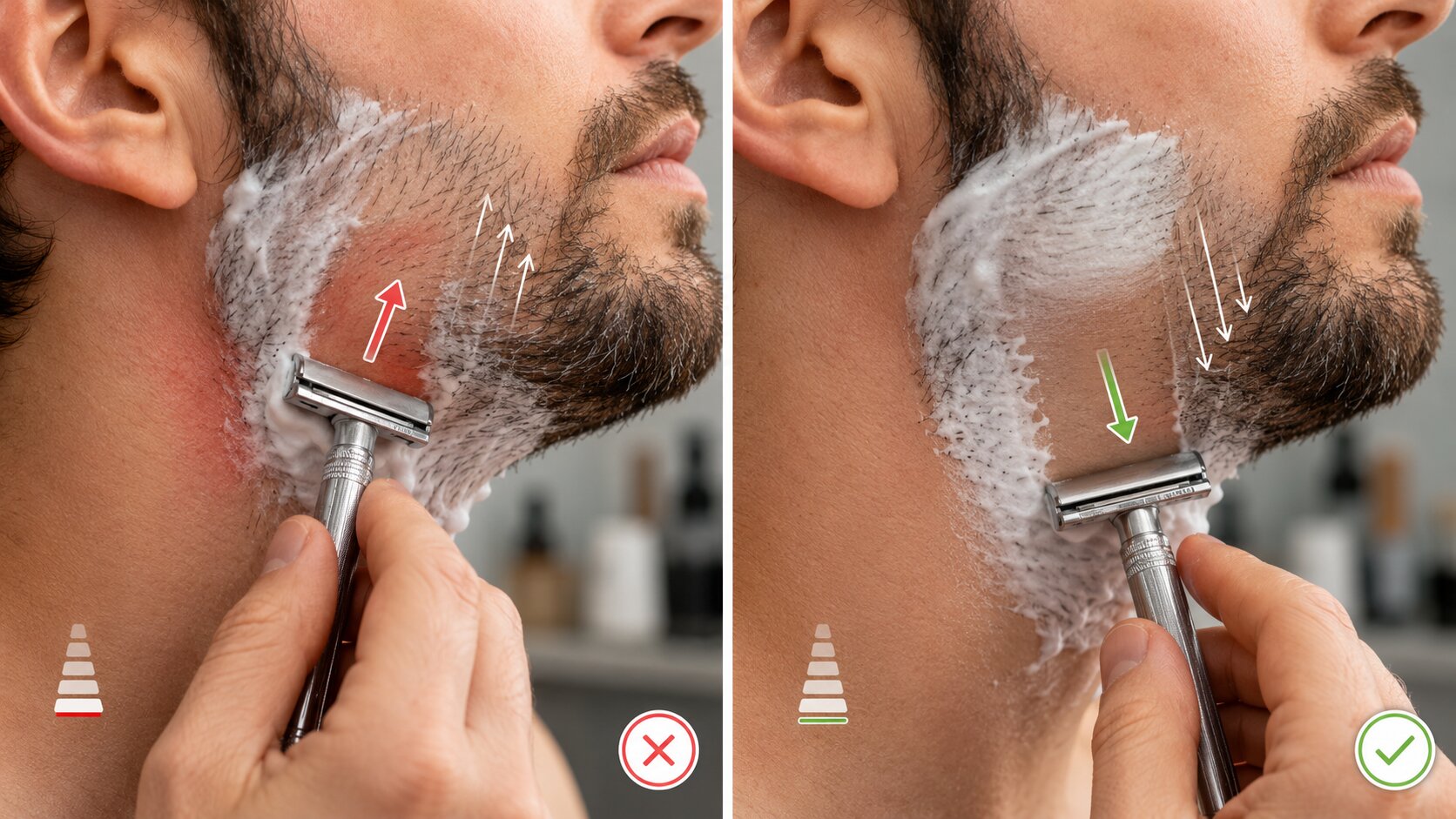
Soap can work in a pinch, but a proper shaving cream or gel creates a much better protective cushion between the blade and your skin, and lets you see exactly where you’ve already shaved. Let it sit on your skin for a minute or so before you start, so it has time to soften the hair fully.
An Optional Extra Layer: Pre-Shave Oil (and Why It's Divisive)
Ask ten experienced wet shavers about pre-shave oil and you’ll get ten opinions — which is exactly why it belongs here as an *option*, not a commandment. The idea: before your shaving cream goes on, you massage a thin layer of oil (or wash with a glycerin-based soap) into the warm, wet skin. The cream then sits on top of that slick base layer, giving the blade two layers of glide instead of one.
Who actually benefits? In practice, it’s shavers with coarse, wiry hair and sensitive skin — the combination where the blade needs the most help. The co-founder of Pacific Shaving Company recommends applying shaving oil *before* cream “to soften the skin and hair — and for a more comfortable experience” (https://www.whowhatwear.com/how-to-prevent-razor-burn). A glycerin soap wash achieves something similar more cheaply: glycerin is a humectant, so it holds water against the skin while you lather over it.
The honest caveats, because the skeptics have a point:
– It doesn’t replace good lather. A thin oil layer under thin, airy lather still gives you a bad shave. The cream remains the main event.
– Less is more. A few drops, massaged in — not a dripping coat. Too much oil gunks up the blade and actually increases drag.
– If your current routine already works, skip it. This is a troubleshooting layer, not a requirement. Many shavers get perfectly burn-free shaves without ever touching the stuff.
Try it for a week if you’re doing everything else right and still getting irritation on the first pass. If the shave feels noticeably slicker and the burn fades, keep it. If you can’t tell the difference, drop it — that’s a valid result too.
4. Use a Sharp, Clean Blade
A sharp blade cuts hair in one pass. A dull one tugs, drags, and forces you to shave the same spot two or three times — which is exactly what causes razor burn. Rinse your blade every few strokes to clear out trapped hair and cream, and replace disposable or cartridge blades roughly every 5 to 7 shaves a guideline recommended by the American Academy of Dermatology sooner if you notice any pulling or discomfort.
5. Shave With the Grain
Shaving in the direction your hair grows — rather than against it — is the single biggest technique change for preventing razor burn. It’s less aggressive on the follicle and the skin around it. If you want a closer shave, you can follow up with a second, gentle pass across the grain once your skin has adjusted, but going against the grain should be a last resort, not your default.
6. Use Short, Light Strokes
Let the weight of the razor do the work instead of pressing it into your skin. Short strokes give you more control and let you clear the blade more often, so you’re always cutting with a clean edge rather than one clogged with hair and cream.
7. Don’t Repeat the Same Spot
Every extra pass over the same patch of skin strips away a little more of its protective barrier. One clean pass with the grain is enough for most people; if you need a closer shave, a single light second pass is usually plenty.
The Re-Lather Rule: Touch-Ups Done Right
“Don’t go over the same spot twice” is good advice — and almost nobody follows it perfectly. There’s always one patch under the jawline or behind the knee that the first pass missed. The mistake isn’t the second pass itself. It’s the second pass over bare, unlathered skin.
Here’s the rule dermatologists and veteran shavers agree on: never let the blade touch skin that doesn’t have fresh lather on it. If you missed a spot, don’t just swipe at it. Put the razor down, work up lather (or shave cream) on that patch again, and *then* make your touch-up stroke — one light pass, with the grain. As one shaving guide puts it: “If you missed a spot, reapply shaving cream before making another stroke” (https://thestyleledger.com/how-to-prevent-razor-burn/). That thirty-second habit is the difference between a clean touch-up and the raw, scraped feeling that turns into razor burn by lunchtime.
This also explains why “shaving cream ran out” shaves go so badly. Plenty of people admit to it — one grooming writer confessed, “I’m guilty of not using shaving cream when I’ve run out, but it’s not advised” (https://www.whowhatwear.com/how-to-prevent-razor-burn). Shaving on water alone, or on the thin residue of a previous pass, means the blade drags instead of glides, and dragging is the mechanical root of razor burn. If you’re out of cream, ordinary hair conditioner is a better emergency substitute than water — it’s slick, moisturizing, and doesn’t foam away mid-stroke.
One pass with lather beats three passes without it. Every time.
8. Don’t Pull Your Skin Tight
Stretching the skin taut to get a closer shave is tempting, but it changes the angle the hair is cut at and increases the odds of it curling back into the follicle once it grows out — which is what leads to razor bumps, not just razor burn.
9. Rinse With Cool Water and Pat Dry
Finish by rinsing off any leftover cream with cool water, which helps calm the skin down, then pat — don’t rub — the area dry with a clean towel.
Choosing the Right Razor
There’s no single razor that’s automatically best for everyone, but a few guidelines help:
- Sharpness matters more than blade count. A sharp single-blade razor will treat your skin better than a dull five-blade cartridge.
- Multi-blade razors can give a closer shave in fewer strokes, but each additional blade also means more contact with your skin, which can increase irritation for sensitive skin types.
- Single-blade and safety razors are often recommended for people who deal with frequent razor burn or ingrown hairs, since they cut cleanly without compounding passes.
- Electric razors and trimmers don’t touch the skin as directly as a blade does, which makes them a solid option if you’re prone to chronic irritation — the trade-off is a slightly less close shave.
Whichever razor you choose, keep it clean and dry between uses, and don’t leave it sitting in a wet shower where bacteria can build up on the blade.
Blade Handling Habits That Quietly Prevent Irritation
The post above covers the big blade rules — sharp, replaced every 5–7 shaves, rinsed during the shave, stored dry. But a few handling habits that never make it into most guides quietly affect how much irritation a blade causes over its life.
Stop tapping the razor on the sink. Nearly everyone does it — a sharp rap against the porcelain to knock lather and stubble out of the head. Dermatologist-backed shaving guides specifically warn against it: “Don’t tap the blade: tapping can damage the specialized coating on most razor blades” (https://world-today-journal.com/razor-burn-causes-symptoms-how-to-prevent-it/). Modern blades carry microscopically thin coatings (often PTFE-based) that make the edge glide; chipping that coating on a hard sink edge leaves you shaving with a rougher blade for the rest of its life. Rinse under strong running water instead — hot water clears lather faster — and shake the razor vigorously to dry it.
Dry it and store it blade-up. The post already says not to leave a razor sitting in a wet shower. Take it one step further: after shaking off the water, store the razor somewhere dry with the blade facing up, not resting on its edge. A blade sitting in a puddle corrodes microscopically between shaves, and a corroded edge tugs — and tugging is what you’re trying to eliminate.
Sanitize occasionally if you’re bump-prone. If you regularly get infected-looking bumps after shaving, bacteria on the blade may be part of the story. Dermatologist Dr. Cameron Rokhsar suggests rinsing the razor well and dipping it in rubbing alcohol to decrease bacteria, then storing it in a clean place with a guard on (https://cosmeticlaserskinsurgery.com/blog/prevent-razor-burn-temporarily-permanently/). You don’t need to do this daily — periodically is enough, and don’t store the razor *in* the alcohol, which will rust the blade.
None of these replace the fundamentals. But a sharp blade that’s been banged against the sink and left wet all week isn’t really a sharp blade anymore — and treating it right costs nothing.
Aftercare: What to Do Right After Shaving
The few minutes right after you shave matter almost as much as the shave itself, since your skin’s barrier is at its most vulnerable during that window.
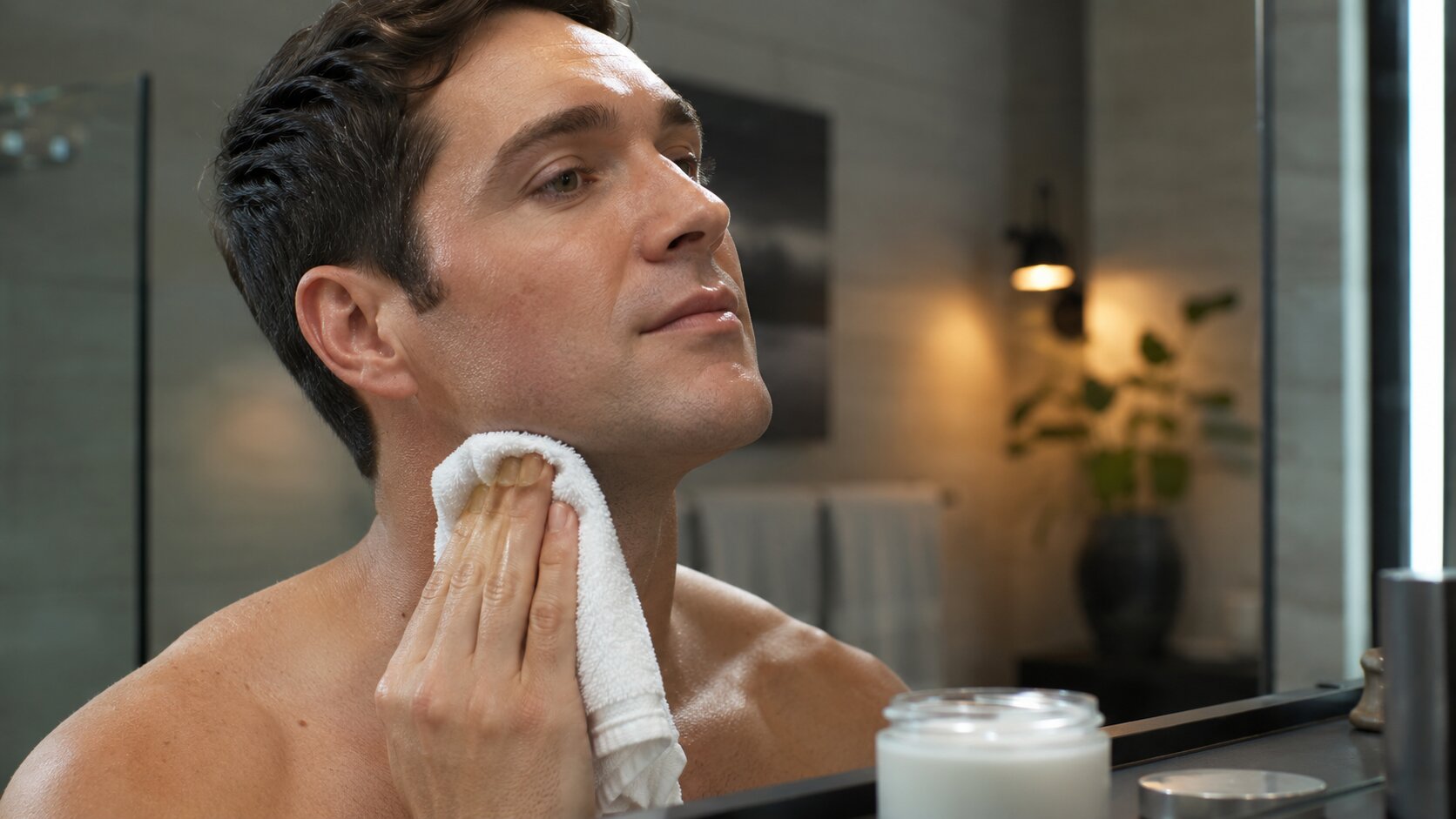
- Moisturize immediately. Apply a fragrance-free, alcohol-free lotion or gel within a few minutes of finishing. Look for calming ingredients like aloe vera, and humectants like glycerin or hyaluronic acid.
- Skip alcohol-based aftershaves. They may feel refreshing, but alcohol dries out and further irritates skin that’s already been through a shave.
- Avoid fragranced products on freshly shaved skin — perfumes and essential oils are common triggers for contact irritation right after shaving.
- Wear loose clothing over the area for a few hours. Tight fabric rubbing against freshly shaved skin is a common, easily avoidable cause of extra irritation.
- Hold off on active skincare — retinol, vitamin C, and exfoliating acids — for 24 to 48 hours after shaving a sensitive area.
Post-Shave Exfoliation: For Ingrown-Prone Shavers Only
Everything above recommends exfoliating *before* you shave. But dermatologists point to a second window that most guides ignore: gently exfoliating *after* shaving, specifically to prevent ingrown hairs.
The logic comes from dermatologist Dr. Amy Spizuoco: “very gently massage the area with an exfoliating wash as soon as you finish shaving. This will free up the hair follicles and make sure they don’t get trapped under the surface of the skin” (https://sekhonfamilyoffice.com/blogs/celebrity-life/treat-and-prevent-pesky-razor-burn-with-these-expert-tips). And dermatologist Dr. Aamna Adel recommends a glycolic acid spray used 2–3 times per week, applied about 30 minutes after shaving, to keep follicle openings clear so hairs grow out instead of curling back in (https://www.facebook.com/reel/1058233743550469/).
This is a targeted tool, not a general recommendation — it needs careful framing:
– It’s for ingrown-prone skin, not for active razor burn. If your skin is currently red, stinging, or raw from the shave, exfoliating it further is exactly wrong. Wait until the irritation has fully settled.
– Chemical beats physical here. A gritty scrub on freshly shaved skin is too aggressive. A mild salicylic- or glycolic-acid product — a gentle exfoliating wash, a spray, a pad — does the job without friction. Salicylic acid has the added advantage of being oil-soluble, so it works inside the pore where trapped hairs start.
– Not on shave day for sensitive skin. If your skin is reactive, use chemical exfoliants on rest days between shaves rather than immediately after. Once or twice a week is plenty.
– Moisturize after. As always, follow with a fragrance-free moisturizer — exfoliation without moisture just trades one irritation for another.
One more option for the chronically bump-prone, from Gillette’s own grooming guide: if ingrowns keep returning no matter what you change, consider trimming the area to a short stubble instead of shaving it smooth (https://gillette.com/en-us/shaving-tips/manscaping/help-prevent-shaving-irritation). A close trim sidesteps the entire ingrown cycle. It’s not the baby-smooth result most people want — but for some skin, it’s the difference between constant bumps and none.
If bumps keep recurring, leave dark marks, or scar, that’s beyond home care — talk to a dermatologist.
What Real People Say Actually Works
Beyond dermatology guidelines, online shaving communities like r/wicked_edge, r/HairRemoval, and r/shaving are full of people who’ve tested nearly every trick to fix razor burn. A few tips come up again and again:
- Warm face, cold blade. Several long-time safety-razor users swear by keeping the razor itself cold (even chilled in the fridge) while the skin and lather stay warm — the contrast seems to tighten pores and reduce irritation for some people.
- Switching to a double-edge safety razor. A recurring theme across shaving forums is that people with chronic razor burn who switch from multi-blade cartridges to a single-blade safety razor report a dramatic drop in irritation, though it takes a few shaves to get the technique down.
- Alum block aftercare. A classic barbershop staple — swiping a damp alum block over freshly shaved skin — is frequently mentioned as an effective way to calm redness, though it can sting briefly on broken skin.
- Post-shave astringents like witch hazel. Used as a light, alcohol-free toner after shaving, witch hazel comes up often as a way to soothe irritation without over-drying skin.
- Hair conditioner instead of shaving cream. Especially popular in trans and sensitive-skin communities, ordinary hair conditioner is often used as a substitute lubricant — it’s gentle, moisturizing, and doesn’t foam away as quickly as shaving cream.
- New blade every other shave for problem areas. For areas prone to bumps, several users mention replacing the blade even more frequently than the standard 5–7 shave guideline.
None of these replace a dermatologist’s advice for chronic or severe cases, but they’re worth testing if the standard routine alone isn’t fully solving your irritation.
Watch: Dermatologist-Approved Shaving Techniques
If you’d rather watch the technique in action, these two dermatologist-led videos cover exactly what’s outlined above:
- How to Cure Razor Bumps Fast — a practical breakdown of pseudofolliculitis barbae (beard bumps) and how shaving habits contribute to it, particularly for coarse or curly facial hair.
How to Treat Razor Burn If You Already Have It
If the redness has already set in, the good news is that razor burn almost always resolves on its own. A few things can speed that along and ease the discomfort in the meantime:
- Apply a cool, damp washcloth to the area for a few minutes to calm heat and stinging.
- Use a gentle moisturizer with aloe vera or ceramides to support your skin barrier while it heals.
- Try an over-the-counter 1% hydrocortisone cream for a day or two if the itching or inflammation is bothersome — don’t use it long-term, since it can thin the skin with extended use.
- Skip shaving that area until the irritation has fully settled.
- Avoid scratching or picking at the skin, which can turn mild irritation into something that lasts longer or scars.
If the area looks infected — spreading redness, warmth, swelling, or pus — see a doctor rather than continuing to treat it at home.
Razor Burn vs. Razor Bumps: What’s the Difference?
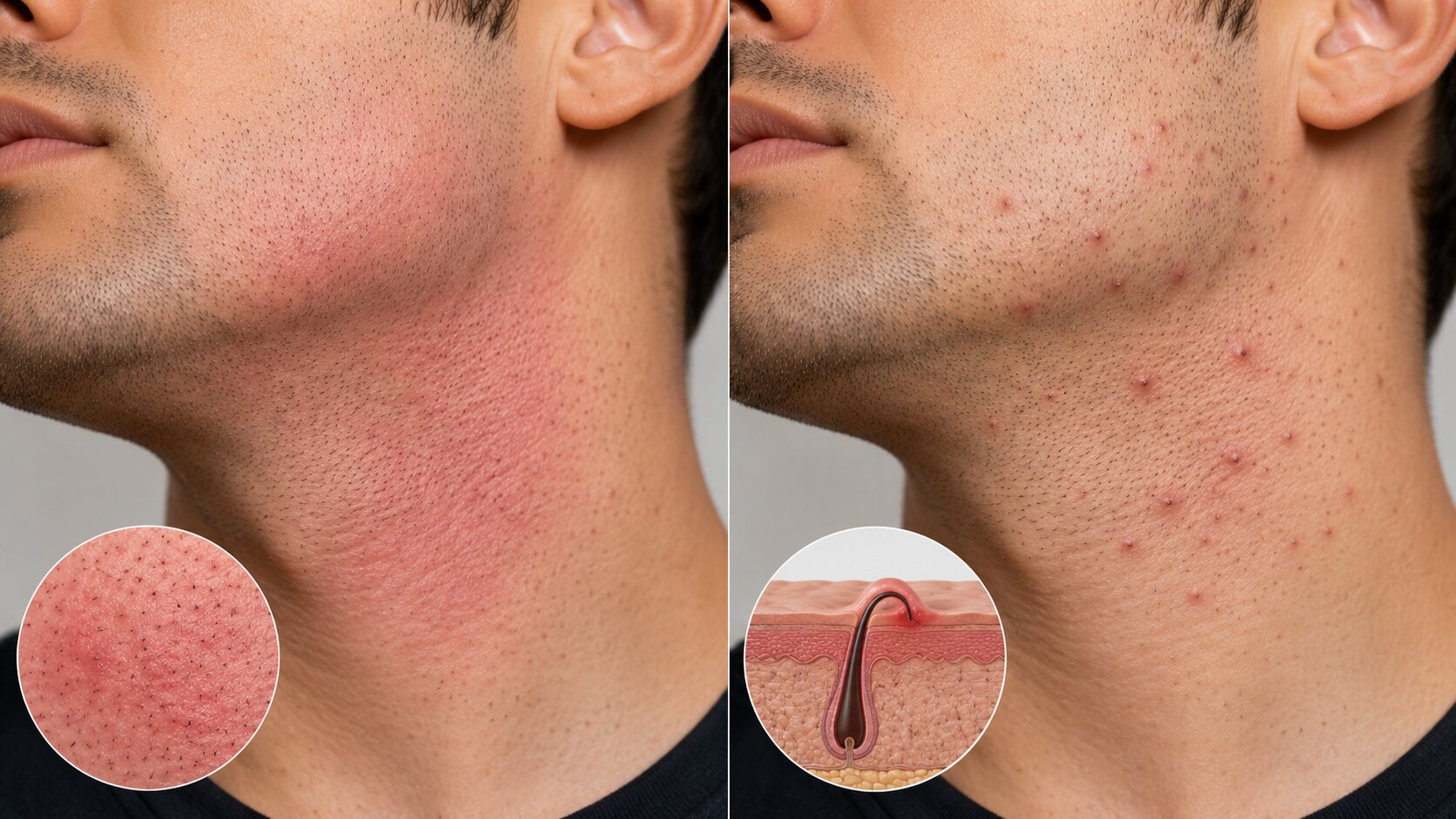
These two terms get used interchangeably, but they’re actually different conditions with different causes.
| Razor Burn | Razor Bumps |
| Surface-level friction irritation | Caused by ingrown hairs curling back into the skin |
| Appears within minutes of shaving | Develops as hair grows back, often days later |
| Diffuse redness or rash | Small, individual pimple-like bumps |
| Usually clears in a few hours to days | Can take weeks and may leave dark marks or scarring |
Razor bumps are especially common in people with coarse or tightly curled hair, since Mayo Clinic notes that curved hair is more likely to re-enter the skin after it’s cut short. The medical term for a more severe, chronic version of this is pseudofolliculitis barbae. If you’re mainly trying to figure out how to prevent razor bumps rather than a simple post-shave rash, the fix is different: leaving a small amount of stubble instead of shaving completely smooth, always shaving with the grain, and giving your skin more recovery time between shaves — sometimes stopping altogether for a few weeks to let the trapped hairs release. Persistent or painful bumps are worth discussing with a dermatologist, since chronic cases can lead to scarring if left untreated.
How to Prevent Razor Burn on Different Areas
Face and Neck
The neck is one of the most common places for razor burn because hair often grows in multiple directions there, making “with the grain” harder to judge. Map out the grain direction first, use short strokes, and rinse the blade constantly — a clogged blade on the neck is a fast route to irritation.
Legs and Arms
Use short strokes rather than long ones from ankle to knee — a razor clogs quickly, and by the time you’ve dragged it a foot up your leg it’s no longer cutting cleanly. Bend your knee slightly while shaving over it so you’re working on a firmer surface, and keep your ankle flexed to avoid the skin bunching up.
Underarms
Exfoliate this area specifically, since deodorant and sweat buildup can clog a blade fast. Hair usually grows in multiple directions here, so shave downward first, then check for any remaining hair before going side to side. Skip deodorant or antiperspirant immediately afterward — apply a gentle aftercare product first and let your skin settle.
Bikini and Pubic Area
This is the area where technique matters most, since the skin is thinner and more sensitive. Trim long hair with an electric trimmer before using a razor, exfoliate beforehand, use short strokes, and rinse the blade often. Afterward, avoid tight underwear or leggings for a few hours — friction against freshly shaved, sensitive skin here is one of the most common causes of irritation and ingrown hairs in this area.
Common Shaving Mistakes That Cause Razor Burn
- Shaving dry, without any lubrication
- Using a razor blade for far longer than 5–7 shaves
- Rushing through the shave with long, hard strokes
- Shaving the exact same spot three or four times to get it “perfectly” smooth
- Applying alcohol-based aftershave to already irritated skin
- Shaving daily when your skin clearly needs more recovery time between shaves
When Should You See a Doctor?
Most razor burn is harmless and temporary, but reach out to a doctor or dermatologist if:
- Irritation lasts more than a few days despite home care
- You see signs of infection — pus, spreading warmth, or worsening swelling
- You develop severe swelling or hives, which could point to an allergic reaction rather than simple razor burn
- Razor bumps keep recurring or leave dark marks and scarring
Frequently Asked Questions
What is razor burn?
Razor burn is a temporary skin irritation caused by friction between a razor blade and your skin during shaving. It shows up as redness, stinging, and sometimes small bumps, usually within minutes of finishing a shave.
How can I prevent razor burn?
Shave with a sharp, clean blade after softening your skin with warm water, use shaving cream, go with the grain, and moisturize right after. Skipping any one of these steps is usually enough to bring razor burn back.
Is it better to shave with or against the grain?
With the grain is safer and causes less irritation. Against the grain gives a closer shave but increases the risk of both razor burn and ingrown hairs.
Does shaving cream actually help prevent razor burn?
Yes — it reduces friction between the blade and your skin and helps the hair soften before it’s cut, both of which lower the chance of irritation compared to shaving dry or with soap alone.
How often should I change my razor blade?
Roughly every 5 to 7 shaves for a standard disposable or cartridge blade, sooner if it starts to feel like it’s tugging rather than cutting.
How long does razor burn last?
Most cases clear up within a few hours to a couple of days with basic aftercare. If it’s still there after 72 hours, or getting worse, it’s worth getting it checked.
How to cure razor burn fast?
Rinse the area, apply a cool damp cloth for a few minutes to calm the heat, then follow with a fragrance-free moisturizer containing aloe vera. A thin layer of 1% hydrocortisone cream can help relieve stubborn itching or redness within a day or two.
What to put on razor burn?
Aloe vera gel, a fragrance-free moisturizer, or a short course of over-the-counter hydrocortisone cream are the most commonly recommended options. Avoid anything with alcohol or added fragrance while the skin is irritated.
What’s the difference between razor burn and razor bumps?
Razor burn is surface irritation that shows up almost immediately after shaving. Razor bumps are ingrown hairs that develop as the hair grows back, and they take longer to appear and resolve.
Should you moisturize after shaving?
Yes, every time. Your skin’s protective barrier is temporarily more vulnerable right after a shave, and a fragrance-free moisturizer helps it recover faster and stay comfortable.
How do I stop razor burn?
Cool the skin first with cold water or a damp cloth, then apply a fragrance-free moisturizer or pure aloe vera. Avoid shaving over the irritated area until it calms down — usually 24 to 48 hours — and switch to a fresh, sharp blade before your next shave, since dull blades are the most common cause.
Does hydrocortisone help razor burn?
Yes, a 1% hydrocortisone cream can calm the redness and itching of razor burn for a day or two. Use it sparingly and only short-term — it is not a daily aftershave. If the irritation keeps coming back, fix the cause (dull blade, dry shaving, too much pressure) instead of treating the symptom.
About the author: Chris Garczynski
Chris is a Minnesota-based wet shaving enthusiast and founder of Wet The Blade. After years of testing safety razors, straight razors and grooming products, he shares honest, practical shaving guides \u2014 no sponsored fluff.
The Bottom Line
Preventing razor burn isn’t about buying a more expensive razor or a specific miracle product — it’s about consistency in a few simple habits: soften your skin first, shave with a sharp blade in the direction of hair growth, use minimal pressure and passes, and moisturize right after. If you’re wondering how to stop razor burn or how do I avoid razor burn for good, this is the routine — stick with it for a couple of weeks and razor burns typically stop being something you have to think about.