Why Your Wet Shaving Routine Isn’t Working
If your face is red, your neck is dotted with bumps, or your skin feels sandpapered after every shave, your razor probably isn’t the real problem. Your technique is. Most common wet shaving mistakes are rarely dramatic. You can own a quality safety razor, a sharp blade, and a good shaving soap, and still end up with razor burn, nicks, or an angry neck by lunchtime.
That’s because wet shaving has a learning curve that most beginners skip straight past they treat a double edge razor like the cartridge razor they grew up with, and their skin pays for it.One experienced wet shaver, more than twenty years into the hobby, put it simply: the fix almost never starts with a new razor. It starts with slowing down and paying attention to what your own skin is telling you.So before you order another razor or soap, check whether you’re committing one of these seven sins.
The 7 Common Wet Shaving Mistakes You’re Making
Below are the mistakes that appear again and again across wet shaving communities.
1: You’re Using Too Much Pressure
This is the single hardest habit to unlearn when you move from a cartridge razor to a safety razor.
A cartridge razor practically invites you to press it into your face — the pivoting head and multiple blades are forgiving. A double-edge safety razor isn’t built the same way. The blade is already positioned to cut; pressing harder doesn’t make it cut better, it just increases how aggressively the blade meets your skin.
Why It Causes Irritation
More pressure means more blade contact and more friction. That combination shows up as razor burn, redness, small nicks, and a neck that stings for the rest of the day. According to major shaving brands, excessive pressure is one of the top causes of razor irritation and should be avoided at all costs.
The Fix
Let the weight of the razor do the work. Use short, controlled strokes instead of pushing the head into your face. If the razor isn’t cutting cleanly, resist the instinct to press harder — check your angle, your lather, and your beard direction first. Pressure is rarely the actual problem; it’s usually the symptom of one of the other six sins on this list. Leading razor manufacturers emphasize light touch technique as the most important skill for comfortable shaving.
2: You’re Getting the Blade Angle Wrong
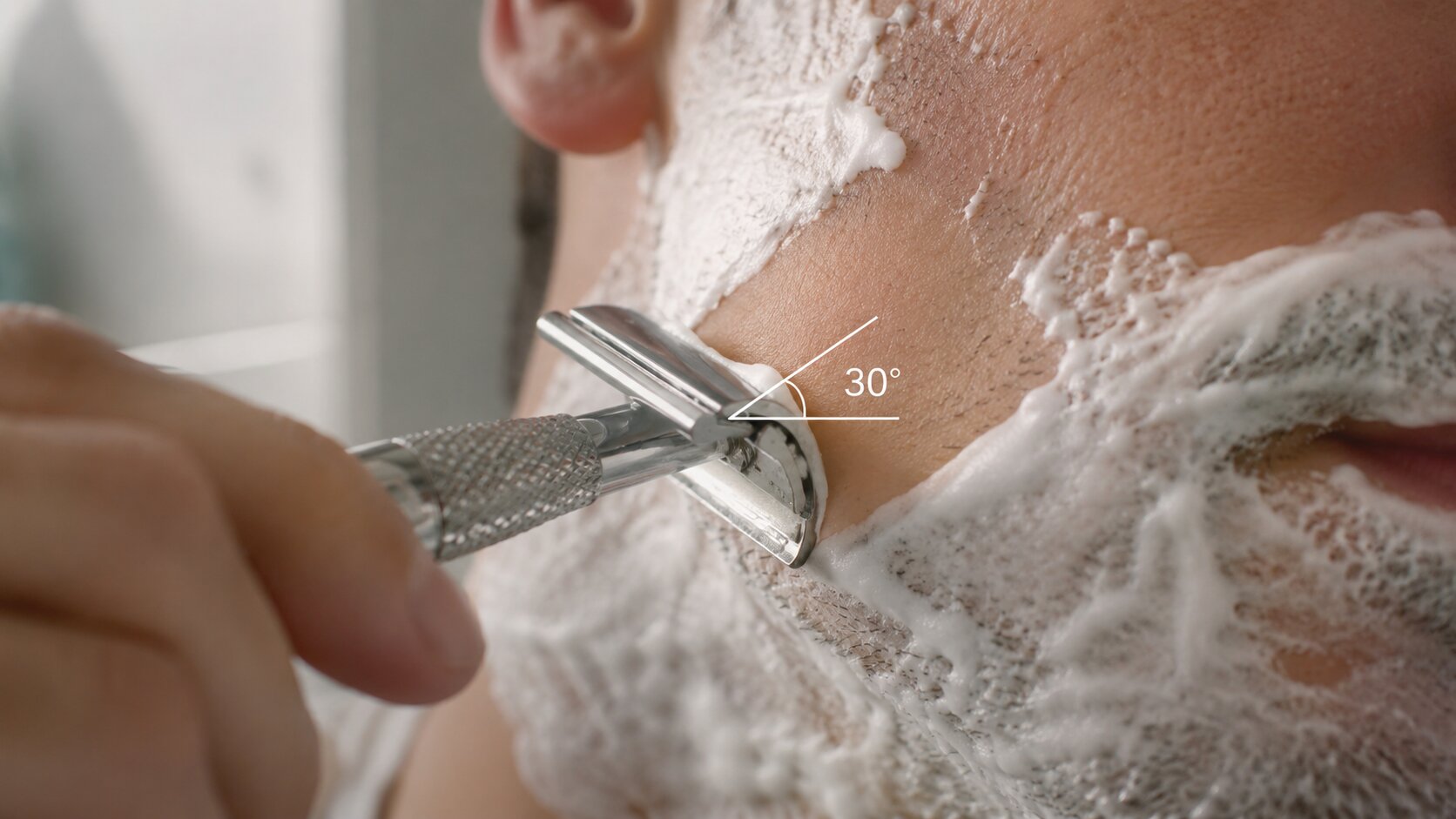
Unlike a cartridge razor, which adjusts itself to your skin automatically, a safety razor asks you to find and hold the right angle yourself.A shallow angle drags the blade’s spine across your skin without cutting efficiently. Too steep, and the blade scrapes rather than shaves. Wet-shaving experts commonly reference roughly 30 degrees as a starting point, but that number isn’t a rule to force onto every contour of your face your jawline, chin, and neck all sit at slightly different angles to the blade.using the wrong razer angel is one of the most common wet shaving mistake especially for beginner learning to use a safety razor.
The Angle Problem
One recurring mistake even experienced shavers describe: flinging the wrist instead of moving the whole arm to hold the angle steady, especially under the jawline — exactly where irritation tends to show up first.
The Fix
Slow down and pay attention to how the blade sounds and feels against your stubble. Practice on the easier, flatter areas of your face before trusting your angle on the neck and jawline. You’re not trying to memorize a number — you’re trying to find the angle where the blade cuts cleanly without scraping. Wet shaving experts emphasize that blade angle is one of the most important fundamental techniques to master for a comfortable shave.
3: You’re Skipping Face Mapping and Ignoring How Your Beard Actually Grows
Your beard doesn’t grow in one uniform direction. Cheeks often grow downward, while the neck can grow sideways or even upward, and the jawline can shift direction entirely. Shave every part of your face the same way and you may be fighting your own grain without realizing it.
What Is Face Mapping?
This is where face mapping earns its place in a proper routine. Face mapping is simply the process of identifying which direction your facial hair grows in each area, before you ever pick up a razor. Dermatology guidance is consistent on this point: shaving in the direction of hair growth reduces irritation and lowers the risk of ingrown hairs, compared to shaving against it.
How to Map Your Beard
Before you shave, run your fingers lightly across your stubble in a few directions. The direction that feels smoother is generally the direction of growth; the direction that feels rougher is against the grain. Do this across your cheeks, jaw, and neck separately they often don’t match.
The Fix
Don’t assume. Map it once, remember the pattern, and let your first pass follow it rather than fighting it.

4: You’re Shaving Against the Grain Too Aggressively, Too Soon
Shaving against the grain (ATG) gets you closer to the skin — and it’s also the fastest way to turn a comfortable shave into an irritated one.
The Mistake
The mistake isn’t that shaving against the grain is inherently wrong. It’s assuming that closer automatically means better, and reaching for it before your skin — or your technique — is ready for it.
Combine ATG with too much pressure, a poor angle, or a dried-out lather, and irritation compounds fast. This is especially true on the neck, where the grain can change direction two or three times across a small area.
Plenty of experienced wet shavers skip the against the grain pass entirely and simply accept a slightly less close shave in exchange for zero irritation. That’s a legitimate trade off, not a shortcut.
A Safer Progression
| Pass | Direction | Purpose |
| Pass 1 | With the grain | Remove bulk of stubble, gentle on skin |
| pass 2 | Across the grain | Cut closer without aggression |
| Pass 3 | Against the grain (optional) | Maximum closeness, only if skin tolerates |
5: Your Lather Looks Good — But Isn’t Actually Doing Its Job
A tall, fluffy pile of foam feels like success. It isn’t always.
What your skin actually needs is slickness — enough lubrication that the blade glides rather than drags. Judging lather by how impressive it looks, rather than how it performs, is one of the easiest mistakes to make and one of the hardest to notice while you’re mid-shave.
Common Lather Failures
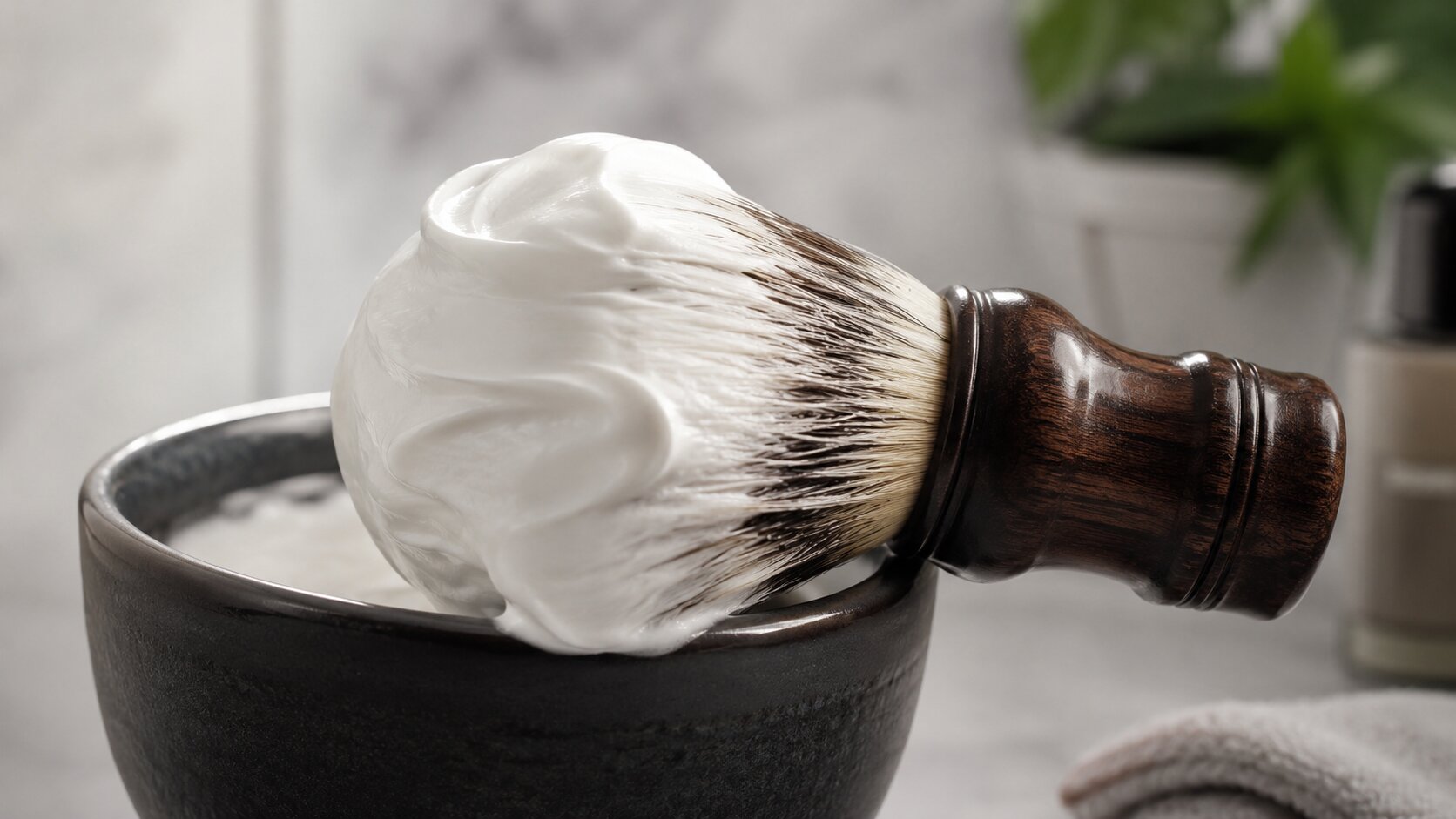
Dunking the whole brush in water. Only the tips should touch the water — roughly the last quarter-inch. Submerging the whole brush washes out the soap you’ve already loaded and wrecks the lather before you’ve started.
Too much water, too fast. If lather is visibly oozing or dripping off your face as you apply it, it’s too wet and has lost its cushioning ability.
Too little water. Thick, pasty, or sticky lather doesn’t glide — it grips.
What Perfect Lather Actually Looks Like
According to premium shaving soap makers, the consistency experienced shavers aim for is often described as yogurt-like: thick enough to hold its shape, slick enough to move easily.
The Fix
Stop judging lather by volume. Judge it by how the razor moves across your skin. If it drags, add water or rebuild before your next pass — don’t push through on a lather that’s already failing.
6: You’re Trying to Finish the Shave Too Quickly
Wet shaving rewards a little patience. That doesn’t mean it has to become a 20-minute ritual — it means the handful of steps that actually matter (prep, lather, angle, pressure, direction) each need a few unhurried seconds.
Why Rushing Backfires
When you rush, technique is usually the first thing to slip. You start taking longer strokes, pressing harder without noticing, skipping proper prep, or going over the same patch of skin repeatedly because you’re moving too fast to tell if it actually needs it. Healthcare experts recommend taking proper time with shaving prep to avoid irritation and ingrown hairs.
Prep Matters More Than Most Beginners Assume
A quick splash of cold water doesn’t meaningfully soften coarse facial hair — it takes two to three minutes of genuine warmth to do that. A hot shower is the easiest way to get there, but it isn’t the only way: a scalding hot towel held against the face for three to four minutes achieves a similar effect when a shower isn’t practical, and some experienced shavers report a noticeable difference in comfort between a properly warmed shave and a rushed, cold one — including more stinging and irritation on days they skipped it.
The Fix
Don’t try to move faster across every part of your face. Be deliberate specifically around the neck, jawline, chin, and upper lip — the areas where grain direction changes and irritation shows up first. A few extra seconds there is a far better trade than a few extra days of recovering skin.
7: You’re Chasing the Perfect BBS Shave
BBS — baby-bottom-smooth — is the finish everyone imagines when they picture a “great shave.” It’s also the mistake most likely to leave you regretting the last five minutes of your routine.
The BBS Trap
You finish a pass. You still feel a trace of stubble. So you go over it again. And again. Each additional pass increases blade contact, and doing it without fresh lather multiplies the friction.
What Experienced Shavers Actually Do
Experienced wet shavers who’ve been at this for years frequently land in the same place: chasing an absolutely smooth finish, especially through repeated against-the-grain passes, tends to cause more irritation than it’s worth. Some describe trying to chase BBS early on and simply never getting a good shave out of it — until they stopped chasing it and started prioritizing comfort instead.
A Better Question to Ask Yourself
Not “how close can I possibly get?” but “how close can I get while keeping my skin comfortable?” That’s a far more sustainable target, and it’s the one that actually holds up over months and years of shaving rather than one closely inspected mirror moment.
Bonus: The Equipment Trap (The Eighth Unspoken Sin)
There’s an eighth pattern worth naming, even if it’s not technically a “sin” of technique: blaming the equipment for every bad shave.
Bad shave? New razor. Still rough? New blade. Still irritated? New soap. Then a new brush. Then another razor.
Eventually the shelf looks impressive and the technique hasn’t improved at all.
The Real Cost of Equipment Chasing
Wet shaving genuinely can save money compared to constantly buying disposable cartridges — but it can just as easily become an expensive hobby if the search for the “perfect” setup never stops. The honest fix is to change one variable at a time — pressure, angle, lather, direction, number of passes, blade condition, or prep — and actually learn what each one does to your shave before reaching for your wallet.
Razor Burn vs. Razor Bumps: They’re Not the Same Problem
These two terms get used interchangeably, but they describe different things — and the fix depends on knowing which one you actually have.
Razor Burn
Razor burn is friction-based irritation. It shows up shortly after shaving as redness, stinging, or a rash-like reaction, and it’s typically caused by pressure, a poor angle, insufficient lubrication, or too many passes.
Razor Bumps
Razor bumps are related to ingrown hairs — hair curling back into the skin, often after a very close shave against the grain. They tend to appear as small, raised bumps rather than a diffuse rash, and they’re more common in people with coarse or curly facial hair.
How to Know Which You Have
If your problem is stinging redness right after shaving, look at pressure, prep, and lubrication. If your problem is small bumps appearing a day or two later, look at your shaving direction and how close you’re cutting.
What Experienced Wet Shavers Actually Teach Us
Look across long-time wet shavers, beginner discussions, and the same handful of demonstration videos that keep surfacing, and one thing is consistent: the biggest improvements rarely come from owning the most expensive gear. They come from understanding your own skin, your own beard growth, and your own blade.
That’s why prep matters. That’s why face mapping matters. That’s why pressure and lather technique matter more than the price tag on your razor. Copying someone else’s exact setup won’t guarantee their result — your beard and skin are your own, and your technique needs to be built around them, not around a spec sheet.
What Real Wet Shavers Say
Beyond the dermatology guidance and demonstration videos, some of the most useful insight on this topic comes from people who’ve simply been doing it for years and talk openly about what went wrong along the way.
On Pressure
One wet shaver with more than two decades of experience, who shaves with notably sensitive skin, has said the biggest lesson wasn’t about finding the “right” razor — it was learning to trust the blade instead of forcing it.
On Chasing Closeness
Several long-time community members describe the same arc — trying hard to get an ultra-close, baby-bottom-smooth finish early on, getting nothing but irritation for their trouble, and only starting to enjoy the hobby once they stopped chasing it and accepted a slightly less close, far more comfortable shave.
On Mistakes Everyone Eventually Makes
One widely shared story involves a shaver who spent weeks struggling with poor results, only to discover the razor’s baseplate had been assembled upside down the entire time — a reminder that sometimes the “technique problem” is really just a setup problem worth double-checking first.
On the Cost of the Hobby
A recurring, half-joking observation in these communities is that wet shaving really can save money compared to disposable cartridges — but only if you stop there. The moment it turns into chasing every new soap release and limited-edition razor, the savings disappear, and the constant equipment-hunting rarely fixes a shave that technique alone could.
On Why People Stick With It
Plenty of shavers describe the process itself as closer to a short daily ritual than a chore — the deliberate lathering, the loading of the razor, the attention each step demands — which is part of why rushing through it tends to backfire on both the shave and the experience.
The Common Thread
Nobody credits their best shave to the price tag on their razor. They credit paying attention.
Your Wet Shaving Mistakes Checklist
Before your next shave, run through this quickly:
- Am I pressing too hard?
- Is my blade angle controlled, not just guessed at?
- Do I actually know which direction my beard grows?
- Is my lather providing real slickness, or just volume?
- Am I making more passes than my skin needs?
- Am I going against the grain out of habit, not necessity?
- Did I actually prep properly, or did I rush it?
- Am I chasing BBS at the expense of comfort?
- Am I blaming my equipment before fixing my technique?
Frequently Asked Questions About Wet Shaving Mistakes
What are the most common wet shaving mistakes?
The most common mistakes are using too much pressure, holding the razor at an inconsistent angle, using poorly hydrated lather, ignoring the direction of beard growth, making too many passes, and shaving against the grain before your skin is ready for it. Together these are the leading causes of razor burn, nicks, tugging, and an uncomfortable shave.
Why does wet shaving cause razor burn?
Razor burn happens when the skin experiences excessive friction or repeated blade contact. Common causes include too much pressure, inadequate lubrication, an incorrect blade angle, too many passes, and aggressive against-the-grain shaving.
How can I prevent razor burn when wet shaving?
Start with genuine preparation — a few minutes of warmth, not a quick splash of water. Use well-hydrated lather, apply light pressure, keep a controlled angle, follow your beard’s grain on the first pass, and avoid unnecessary repeat passes. If you need another pass, re-lather first rather than shaving over dry or irritated skin.
What’s the difference between razor burn and razor bumps?
Razor burn is friction-based irritation that appears quickly as redness or stinging. Razor bumps are related to ingrown hairs and tend to show up as small raised bumps, often a day or two after a very close shave against the grain.
What angle should I use with a safety razor?
Roughly 30 degrees is a common starting point, but it isn’t a fixed rule — the right angle shifts slightly across your face’s contours. Aim for whatever angle lets the blade cut cleanly without scraping.
Is a closer shave always a better shave?
No. A very close, baby-bottom-smooth result isn’t better if it comes with razor burn or irritation. For most people, a slightly less close but genuinely comfortable shave holds up better over time.
Do I need expensive shaving equipment to get a better shave?
No. Technique and preparation generally matter more than price. Before replacing your razor, blade, or soap, take an honest look at your pressure, angle, lather, beard direction, and number of passes — most bad shaves trace back to one of those, not the equipment.
How can beginners improve their wet shaving technique fastest?
Slow down and focus on fundamentals rather than chasing the closest possible result. Map your beard grain, build lather for glide rather than volume, use minimal pressure, and keep your angle consistent. Once that’s second nature, experimenting with different blades and razors will actually mean something.
About the author: Chris Garczynski
Chris is a Minnesota-based wet shaving enthusiast and founder of Wet The Blade. After years of testing safety razors, straight razors and grooming products, he shares honest, practical shaving guides \u2014 no sponsored fluff.
Final Takeaway:
Your Shave Starts With Technique, Not Purchases
Most wet shaving mistakes aren’t dramatic. They’re small habits stacking on top of each other — a little too much pressure, a slightly wrong angle, lather that’s a bit too dry, one unnecessary pass, a neck shaved against the grain out of habit, a rushed final stroke.
And then comes the familiar conclusion: “this razor must be the problem.”
It usually isn’t. A better shave comes from learning your beard, understanding your skin, taking preparation seriously, and building consistent technique — not from the next purchase.
Leave a Reply