
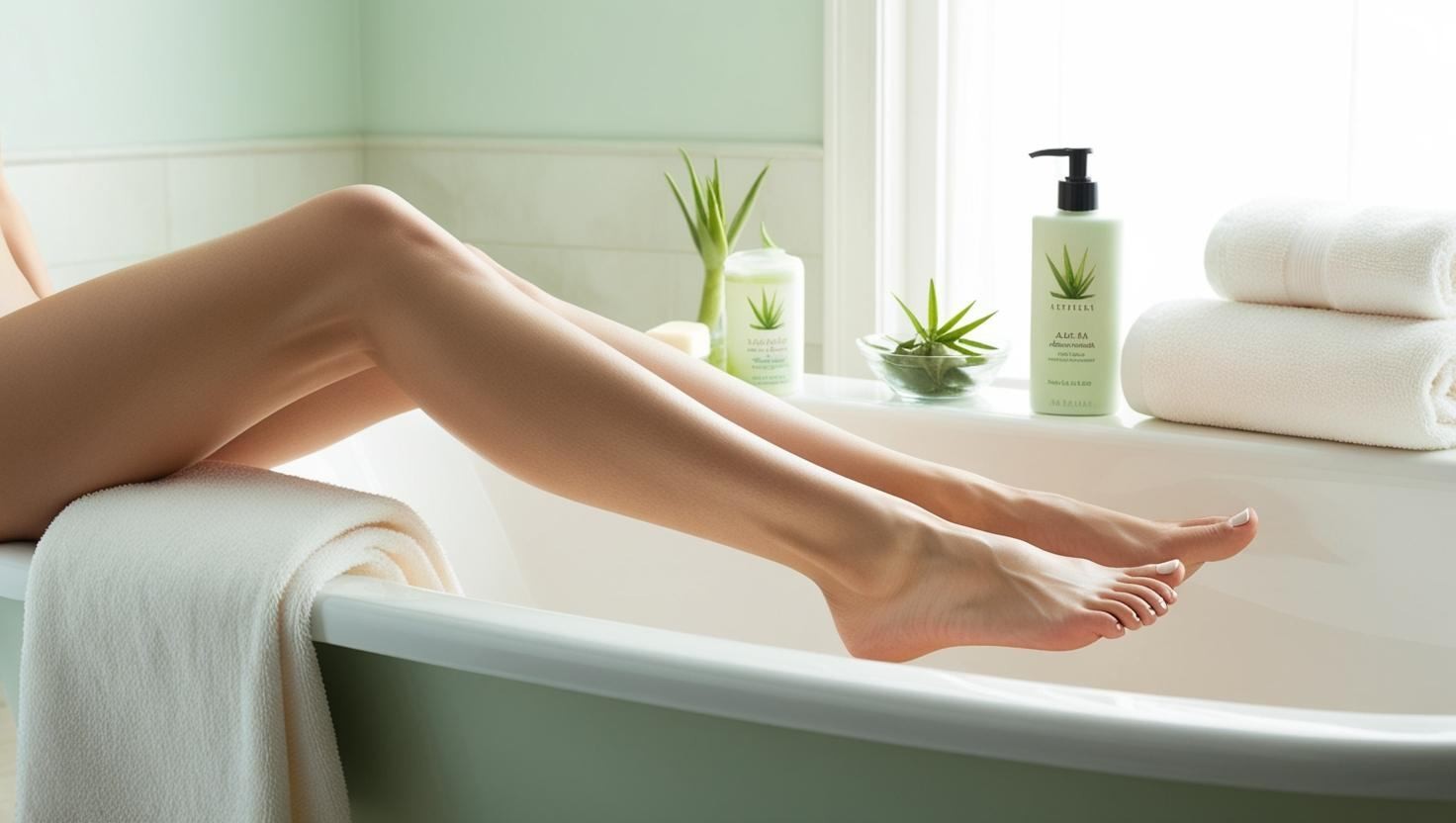
When you shave your legs, the skin can feel smooth and clean, but then it starts to itch. A lot of people have that annoying, constant itchy legs after shaving that comes back after shaving.
It can quickly turn a simple cleaning routine into something that hurts and makes you angry. Some people feel a mild tingle or a strong desire to scratch after shaving.
This is more than just a bothersome feeling; it means that your skin is irritated and may need better care with proper shaving irritation remedies.
This itching is usually caused by a mix of things, like being dry, shaving with a dull razor, not using enough oil, or cutting against the direction of hair growth.
If you have sensitive or allergic skin, even the shaving cream or lotion you use can sometimes make your symptoms worse or cause an allergic reaction.
If you don’t take care of irritation after shaving, it can get worse over time and cause problems like ingrown hairs, razor burn, or even skin diseases.
To feel good about your body and keep your skin looking and feeling its best, you need to keep it healthy and free of itches.
In this article, I’ll talk about why you might be itching after shaving, what you can do to stop it, how to stop itching after shaving, how to make your skin feel better, effective products, and other hair removal choices that may be better for your skin.
Understand the Itch: Why It Happens
Itching after shaving your legs is normal and can be very annoying. You need to know what’s going on below the surface in order to treat or stop it properly, especially if you’re experiencing itchy legs after shaving.
Not only does shaving get rid of hair, but it also removes the top layer of skin that protects the hair.
This can make the face more likely to get irritated, lose moisture, and let bacteria in. The razor can make tiny cuts or nicks in your skin every time it moves over it, even if you can’t see them.
These small problems can cause inflammation, which can make the skin itch, turn red, or feel like it’s burning. This reaction may be stronger for people with sensitive skin, who often look for shaving irritation remedies.
Several things can cause that annoying itch after shaving:
- Dryness or lack of moisture: Shaving without proper hydration strips away natural oils, leaving skin parched and prone to itching.
- Dull razor blades: A blunt blade pulls at the hair instead of cutting it cleanly, increasing the risk of irritation and razor burn.
- Shaving too frequently: Daily shaving doesn’t give your skin enough time to heal between sessions.
- Allergic reactions: Some shaving creams, gels, or after-shave products contain fragrances or harsh chemicals that may trigger allergic responses.
- Ingrown hairs and folliculitis: When hairs grow back into the skin instead of out of it, they can cause red, itchy bumps that resemble pimples.
Knowing how to stop itching after shaving can help you prevent these uncomfortable symptoms.
Mild itching goes away on its own most of the time, but some signs should be checked out by a doctor.
You shouldn’t ignore signs of an infection like pus-filled bumps, swelling, or pain that won’t go away.
If over-the-counter medicines don’t help or if the irritation gets worse over time, you should see a physician to rule out eczema, fungal infections, or bacterial folliculitis.
Follow These Pre-Shaving Tips to Prevent Itching
Before the razor even hits your skin, you should do things that will help you get a smooth, itchy shave.
For fewer irritations, razor bumps, and itchy legs after shaving, take a few extra minutes to properly prepare your legs.
To make your skin work better, do these things:
Exfoliate Gently
If you have dead skin cells on your legs, they can get stuck in your razor and make your skin itch.
If you exfoliate your skin before shaving, you get rid of those dead skin cells. This makes the shave tighter and cleaner.
It’s important to be gentle when you scrub. Before getting in the shower, use a soft loofah, a sugar scrub, or dry brush your skin in upward strokes.
This not only makes the skin smoother, but it also helps lift hairs, which makes razor bumps and dead hairs less likely to happen and works as one of the simplest shaving irritation remedies.
Hydrate the Skin
One quick way to make skin worse is to shave it when it’s dry. That’s why you should shower before shaving.
Open up your pores and soften the hair with warm water. This makes it easier for the razor to run across your skin.
If possible, shave right after taking a shower, when your skin is fully wet and your hair has had time to smooth.
This easy step can cut down on friction and pain after shaving by a large amount.
Use a Clean, Sharp Razor
One quick way to make skin worse is to shave it when it’s dry. That’s why you should shower before shaving.
Open up your pores and soften the hair with warm water. This makes it easier for the razor to run across your skin.
If possible, shave right after taking a shower, when your skin is fully wet and your hair has had time to smooth.
This easy step can cut down on friction and pain after shaving by a large amount and is key for anyone wondering how to stop itching after shaving.
Choose the Right Shaving Products
It’s more important than you think what shave gel or cream you use. If you have sensitive skin, choose items that are safe and don’t have any scents.
Stay away from items with alcohol in them because they can dry out and irritate your skin.
Look for chemicals that are good for your skin, like aloe vera, oat extract, or coconut oil, that make your razor glide smoothly and keep your skin healthy.
Shaving Techniques That Help
It matters how you do something. To keep things from getting irritated, always shave in the direction of hair growth.
Don’t scratch or go over the same spot more than once; it can make it red and itchy. Also, don’t put too much pressure on it. Just let the knife do its thing.
When you press too hard, there is more pressure, which makes it more likely that your skin will get hurt and start itching, especially if you already deal with itchy legs after shaving.
Try These Home Remedies for Itching Relief
Take heart if shaving makes your legs itch. You don’t always need to use medicated creams.
You can slow down and soothe your skin with a number of natural home remedies that work well.
Common things that you might already have in your kitchen or bathroom closet can be used in these treatments.
Aloe Vera Gel
Aloe vera is famous for its ability to cool and ease inflammation. It keeps the skin moist, lessens redness, and stops the burning or itching feeling that comes from shaving right away. When there are small cuts or razor burns on the skin, it also helps it heal faster. (Source)

How to use:
- Cut a fresh aloe vera leaf and scoop out the gel (or use a store-bought pure aloe vera gel).
- Apply a thin layer to the affected area.
- Let it sit for 15–20 minutes, then rinse off with cool water or leave it on overnight.
Coconut Oil
Coconut oil is a natural moisturizer that locks in wetness and fights bacteria and inflammation. Putting it on after shaving can help stop burning and keep the skin soft and free of infections.
How to use:
- Warm a small amount of extra virgin coconut oil in your hands.
- Gently massage it onto the itchy area.
- Use it as a daily moisturizer to prevent future irritation.
Oatmeal Bath
Colloidal oatmeal has chemicals in it that relieve pain and protect the skin. This is especially helpful if your legs are itching all over. (Source)
How to prepare:
- Add 1 cup of finely ground oats (or colloidal oatmeal) to a bathtub filled with lukewarm water.
- Soak for 15–20 minutes.
- Gently pat your skin dry with a soft towel.
DIY Tip: Blend plain oats into a fine powder to make your own colloidal oatmeal.
Witch Hazel
Witch hazel is an all-natural astringent that can help with heat, itching, and swelling. It also helps to tighten skin and soothe pores that are red and itchy.
How to use:
- Soak a cotton pad with alcohol-free witch hazel.
- Dab gently on the itchy areas post-shave.
- Let it air dry—no need to rinse off.
Cold Compress
A cold compress is a quick and easy way to stop burning that comes on suddenly. It numbs the area, which makes it less itchy and reduces any swelling. (Source)

How to use:
- Wrap ice cubes in a clean towel or soak a cloth in cold water.
- Press gently on the affected skin for 5–10 minutes.
- Repeat as needed throughout the day.
When Home Remedies Aren't Enough: Simple OTC Options
Aloe vera, oatmeal, and cold compresses handle mild post-shave itching for most people. But sometimes the itch is stubborn — and there’s no rule that says you have to suffer through it with kitchen remedies when the pharmacy aisle has straightforward options. These are the same categories of products dermatologists routinely mention for post-shave irritation:
– Anti-itch creams with menthol or camphor. These work by creating a cooling sensation that essentially distracts the skin’s itch receptors. They’re widely available, inexpensive, and don’t require a prescription. Look for “anti-itch” or “itch relief” on the label rather than a specific brand.
– Calamine lotion. The old pink standby dries out weepy irritation and calms itching. It’s gentle enough for large areas like legs, which makes it practical when the itch isn’t confined to one spot.
– 1% hydrocortisone cream, short-term. For itching driven by visible inflammation — redness and swelling along with the itch — a thin layer of over-the-counter hydrocortisone for a day or two calms things down. Keep it brief: this isn’t a daily moisturizer, and it shouldn’t be used on broken skin.
None of these replace the prevention steps above — they’re for the itch that’s already happening. And the same boundary applies here as everywhere else in shaving aftercare: if itching persists beyond three days despite all of this, or you notice pus-filled bumps, spreading redness, swelling, or fever, stop treating it at home and see a dermatologist. Persistent or infected irritation needs professional eyes, not a stronger cream.
Alternative Hair Removal Options to Consider
If the itching after shaving doesn’t go away, trying other ways to get rid of hair might help and give you better, longer-lasting benefits.
Waxing
Waxing removes hair from the root, which means smoother skin for up to 3–4 weeks.
- Pros: Longer regrowth period, reduced frequency of hair removal, and finer hair over time.
- Cons: Can be painful, especially for sensitive skin; may cause redness or ingrown hairs if not done properly. It’s also best performed by professionals to avoid skin damage.
Hair Removal Creams
Depilatory creams break down hair at the surface level using gentle chemicals.
- Pros: Painless and easy to use at home. Many creams now include soothing ingredients like aloe vera or chamomile to calm the skin.
- Cons: Results typically last only a few days longer than shaving. Some individuals may experience allergic reactions, so a patch test is essential before full use.
Laser Hair Removal
Laser treatment targets hair follicles with light to slow or stop hair growth.
- Pros: Offers a long-term solution with noticeable hair reduction after several sessions. Minimal itching or irritation once treatment is complete.
- Cons: Expensive and requires multiple sessions. Not always suitable for all skin tones and hair colors.
Epilators
These electronic devices mechanically pull out hairs from the root.

- Pros: Provides weeks of smoothness, similar to waxing, and can be done at home.
- Cons: Can be painful and may cause temporary bumps or redness. To reduce irritation, exfoliate before use and moisturize afterward.
After You Shave: Soothing and Moisturizing Properly
When you shave, your skin is put under some stress, but it makes your legs feel smooth. The razor blade takes off hair, but it also takes off a layer of the skin’s natural oils and defenses.
That’s why taking care of yourself after shaving is just as important. If you do the right things right after shaving, itchy legs after shaving, itching, redness, and soreness will go down a lot.
Rinse with Cool Water
Before you go to bed, wash your legs with cool or lukewarm water. Never hot water. After a warm shower or shave, cool water helps close up the pores that were opened.
Closing the pores can make it less likely for germs to get into the hair follicles, which lowers the risk of infection and inflammation. It also soothes right away and helps calm skin that is red and itchy, a key part of how to stop itching after shaving.
Don’t Rub
After you wash your legs, dry them with a clean, soft towel. Be careful not to rub the skin too hard.
Rubbing can cause friction, which can hurt skin that has just been shaved and cause tiny cuts.
Instead, gently pat your skin dry, but leave it a little wet. This will help the lotion or cream you use afterward lock in the moisture.
Apply a Soothing Moisturizer
Apply a lot of soothing, moisturizing moisturizer to your face within three minutes of shaving, while it’s still a little damp.
This keeps wetness in, repairs the skin’s barrier, and calms irritation. Look for goods that have ingredients that calm you down, like
- Aloe vera – known for its anti-inflammatory and cooling properties
- Chamomile – a gentle, plant-based skin soother
- Shea butter – deeply nourishing and helps reduce redness
Avoid lotions with alcohol, artificial fragrances, or dyes, as they can sting and worsen irritation on freshly shaved skin. Use these shaving irritation remedies consistently for best results.
Avoid Tight Clothing
Give your facetime to breathe after you shave. Don’t wear jeans, leggings, or any other fabric that is too tight and might rub against your legs.
If you’re getting dressed right away, choose fabrics that are loose and airy, like cotton. This keeps the skin from hurting and lets the moisturizer work its magic.
The Invisible Irritants: Laundry Detergent, Sweat, and Shave Timing
The post above rightly tells you to wear loose clothing after shaving. But *what’s in* that clothing — and what you do in it — matters as much as how tight it is. Two invisible irritants catch freshly shaved legs off guard.
Laundry detergent residue. Healthline’s dermatology-reviewed guide makes a point most shaving articles skip: the detergents and fabric softeners in your clothes rub directly against freshly shaved skin, and the fragrances and surfactants left in the fabric can trigger itching on skin whose barrier has just been exfoliated by the razor (https://www.healthline.com/health/itchy-after-shaving). You don’t need to overhaul your laundry routine — but if your legs reliably itch after shaving no matter what you change about the shave itself, try switching to a fragrance-free detergent for a few weeks and see if the pattern breaks. It’s one of the cheapest experiments in this whole guide.
Sweat and heat. A dermatology clinic guide to post-shave bumps flags a scenario familiar to anyone who shaves before the gym: “wearing leggings or jeans right after shaving your legs can trap heat and bacteria, worsening irritation” (https://www.london-dermatology-centre.co.uk/blog/itchy-bumps-after-shaving/). Freshly shaved follicles are open and vulnerable; flooding them with sweat and sealing them under tight activewear is asking for itchy bumps. If you work out daily, shave *after* your workout, not before — or at least give your skin an hour or two to settle first.
Timing your shave around your day. This is why the old advice to shave at night works so well: no sun, no sweat, no tight daytime clothes, and hours of undisturbed recovery while you sleep. Pair the nighttime shave with loose cotton sleepwear washed in fragrance-free detergent, and you’ve removed three irritants without buying a single new product.
Don’t Scratch
When your legs start to itch, you might want to scratch, but don’t. Scratching makes the swelling worse, can cause small cuts, and raises the risk of getting an illness or scarring. Instead, put on more lotion or a cold pack to stop itching.
Between-Shave Care: The Chemical Exfoliant Trick Dermatologists Actually Recommend
The post above covers physical exfoliation before shaving — loofahs, scrubs, dry brushing. That’s solid advice. But there’s a second kind of exfoliation that dermatologists keep recommending in 2025 and 2026, and most shaving guides never mention it: gentle *chemical* exfoliation between shaves.
The idea is simple. Physical scrubs work on shave day to lift hairs and clear the blade’s path. Chemical exfoliants — products containing salicylic acid (BHA) or glycolic acid (AHA) — work in the days *between* shaves to dissolve the dead skin cells that cap over follicle openings. When those caps build up, emerging hairs get trapped underneath, curl back, and cause the itchy bumps people mistake for razor burn. Dermatologist Dr. Aamna Adel, whose shaving videos reach hundreds of thousands of viewers, recommends exfoliating 1–2 times per week with salicylic or glycolic acid, and even suggests a glycolic acid spray applied 2–3 times weekly — waiting about 30 minutes after shaving before applying it (https://www.facebook.com/reel/1058233743550469/).
A few ground rules, because this is easy to overdo:
– Never exfoliate on the same day you shave. Shaving is already exfoliation — doubling up is how irritation starts. Use chemical exfoliants on rest days.
– Start mild and infrequent. Once a week is plenty at first. If your skin tolerates it, go to twice.
– Skip it on broken or actively irritated skin. If you’re currently itchy and red from yesterday’s shave, wait until the skin calms down.
– Moisturize after. Chemical exfoliants can be drying, which defeats the purpose — follow with your regular fragrance-free moisturizer.
This isn’t a replacement for the pre-shave scrub. Think of it as maintenance: the scrub prepares the skin for the blade, and the chemical exfoliant keeps the follicles clear while the hair grows back. Many shavers find that adding this one step does more for between-shave itching than any change to their actual shaving technique.
Shaving Tips for Sensitive Skin
Sometimes shaving can feel like a risk if you have sensitive skin. One mistake and you’ll end up with redness, bumps, itchy legs after shaving, and constant burning.
- You can make a big difference in how your skin adapts by making a few smart changes to how you shave.
- Between shaves, give your skin time to heal. If you shave too often, you can damage your skin’s natural protection and make it more likely to get irritated.
- If you have sensitive skin, shaving less often helps reduce redness and lets small cuts or bumps heal properly. Learning how to stop itching after shaving can also make a big difference in your comfort.
- Test any new lotions, shaving creams, or gels on a small area of skin first. Put a little on an area that won’t be seen, like behind the knee or inside the leg, and wait 24 hours.
- Razors with more than one blade can pull on the skin and give you razor burn. Choose a razor with only one blade.
It will cause less pressure and hurt your skin less. It’s kinder and better for places that are easily hurt, and one of the most effective shaving irritation remedies.
It’s smart to shave before bed. At night, you’re out of the sun and not sweating, which can both hurt skin that has just been shaved. Also, while you sleep, your face can calm down.
The Regrowth Itch: Why Days 2–3 Can Be Worse Than Day 1
Plenty of readers do everything right on shave day — sharp razor, good cream, moisturizer after — and still find themselves scratching two days later. That delayed itch has a different cause than shave-day irritation, and it needs a different response.
When you shave, you cut each hair at an angle, leaving a stiff, sharp-tipped stub below the skin’s surface. As that stubble pushes back out over the next 48–72 hours, the sharp tips irritate the follicle walls from the inside. The result is the familiar day-two itch: no redness, no bumps necessarily, just an all-over prickling that makes you want to scratch. One woman describing this exact problem put it plainly: she used “a new razor and non scented shaving cream for sensitive skin each time and moisturiser after” — and it still didn’t help (https://www.justanswer.co.uk/medical/nz22l-legs-constantly-itchy-mainly-shaving.html). If that sounds like you, the issue probably isn’t your shave technique. It’s the regrowth phase.
What actually helps during regrowth:
– Keep moisturizing daily, not just on shave day. Well-hydrated skin lets emerging hairs slide through instead of catching. A moisturizer with urea or ceramides is worth seeking out here — urea softens the dead skin around the follicle opening, which is exactly where sharp stubble gets stuck.
– Exfoliate gently between shaves. A light chemical exfoliant (more on this below) a day or two after shaving clears the dead skin that traps emerging hairs.
– Don’t scratch. Scratching inflames the follicles and can turn a passing itch into red bumps or broken skin. Press a cool, damp cloth against the itchy area instead — it interrupts the itch signal without the damage.
If the itch comes with spreading redness, warmth, pus-filled bumps, or lasts well beyond three days, that’s no longer routine regrowth irritation — see a dermatologist rather than trying another home remedy.
Frequently Asked Questions
Q: Why are my legs so itchy after shaving?
A: Shaving removes the top layer of skin along with the hair, leaving micro-cuts that itch as they heal. Dry shaving, dull blades, very hot water, and skipping moisturizer all make it worse. Shave after warming the skin, always use shaving cream, and moisturize immediately afterward.
Q: Why are my legs itchy 2 days after shaving?
A: Itching that appears a day or two later is usually regrowth irritation or early ingrown hairs. Gentle exfoliation before your next shave and daily moisturizing help a lot. Try not to scratch — it increases inflammation and can lead to infection.
Q: How do I stop itchy legs after shaving?
A: For fast relief: cool rinse, then fragrance-free moisturizer or aloe vera right away, and loose clothing for a few hours. Long-term: shave less often, never dry-shave, replace dull blades on time, and exfoliate between shaves.
Q: What shaving cream is best for itchy legs?
A: Choose a fragrance-free, moisturizing shaving cream or gel with aloe or shea butter. Avoid products with alcohol or heavy fragrance — they dry the skin and trigger itching. In a pinch, hair conditioner works far better than bar soap.